
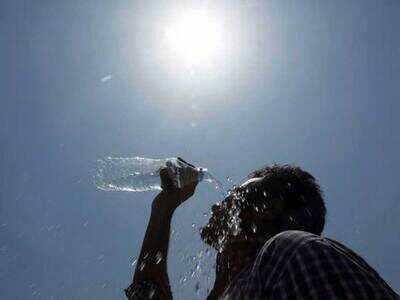
Now the standard seasonal discomfort of Indian summers has transformed into a structural economic and health crisis. On Tuesday, April 28, 2026, a groundbreaking white paper titled ‘Critical Perspectives on Extreme Heat in India’ was released by the Salata Institute for Climate and Sustainability at Harvard University. Therefore, the India extreme heat risk 2026 Harvard report provides a chilling look at the future, warning that extreme heat is now the country’s most dangerous climate risk. Specifically, nearly three-quarters of India’s workforce—approximately 38 crore people—work in conditions with direct heat exposure.
Add businessleague.in as a Preferred Source


Meanwhile, while global average temperatures have risen by 1.4°C since 1980, India’s rise of 0.88°C has been partially “masked” by pollution and irrigation.
But as the air cleans under the National Clean Air Programme, this shield will disappear, potentially exposing 20 crore Indians to lethal heat by 2030.
Also Read |Tamil Nadu Voter List Purge: 97 Lakh Names Deleted in SIR Phase 1
The Salata Institute Report: Why Heat is an “Invisible” Disaster
Now we must understand why extreme heat behaves differently from other climate catastrophes. Unlike cyclones or floods that destroy physical infrastructure overnight, heat is a “slow-burn” disaster. Therefore, the India extreme heat risk 2026 Harvard report argues that governments are currently ill-equipped to track its damage.
A Scattered Impact
First, the report states that “extreme heat impacts are scattered, gradual, and so invisible that they are not captured in the way financial systems measure damage.” Then, this leads to a massive gap in policy response and resource allocation. Thus, because we don’t “see” the damage, we don’t fund the resilience. Next, the Salata Institute highlights that heat-related deaths are often misclassified as underlying health issues. Therefore, the true mortality burden remains a silent crisis that could paralyze public health systems.
The 38 Crore Workforce: Agriculture, Construction, and the Informal Sector
Now the most staggering finding of the report is the scale of human exposure on the ground. Nearly 75% of the Indian workforce is engaged in occupations that require them to stay outdoors or in non-cooled environments.
The Economic Engine at Risk
First, these 38 crore people drive the agriculture, construction, and gig-economy sectors. Then, these heat-exposed industries contribute nearly 50% to the national GDP. Thus, the climate crisis is not just a health issue; it is a fundamental macroeconomic risk. Next, the report notes that as temperatures rise, working hours are inevitably lost, leading to falling incomes for the most vulnerable. Therefore, the India extreme heat risk 2026 Harvard report identifies the “double squeeze” of falling productivity and rising medical costs for low-income workers.
Project 2030: The Acceleration of Lethal Heat Conditions
Now the timeline for this crisis is moving faster than previously predicted. By 2030, just four years away, the report estimates that as many as 20 crore Indians could face “life-threatening” heat.
Crossing the Threshold
First, the frequency and intensity of heatwaves are increasing across North and Central India. Then, the “wet-bulb” temperatures—a measure that combines heat and humidity—are reaching limits where the human body can no longer cool itself through sweat. Thus, survival will become a question of access to mechanical cooling. Next, the early onset of summer in 2026, with 98 of the world’s 100 hottest cities currently in India, proves that this transition is already underway. Therefore, current planning systems may be outdated for the scale of heat India could face by the end of this decade.
Also Read |Tamil Nadu Voter List Purge: 97 Lakh Names Deleted in SIR Phase 1
The “Pollution Shield”: How Aerosols and Irrigation Mask Warming
Now the report reveals a paradoxical “blessing” that is currently fading. India’s landmass has seen a temperature rise of 0.88°C since 1980, which is significantly lower than the global average of 1.4°C.
The Radiative Mask
First, this “slower” warming is due to high aerosol concentrations (pollution) and intense irrigation. Then, pollution particles reflect sunlight back into space, while irrigation cools the air through evapotranspiration. Thus, we have been living under a temporary “shield.” Next, as India implements clean-air policies and groundwater for irrigation depletes, this shield will disappear. Therefore, the India extreme heat risk 2026 Harvard report warns that North India could see a sudden and violent acceleration in temperature rise as the air becomes cleaner.
Economic Under-Counting: Measuring the Real Cost of Productivity Loss
Now we must address the financial blind spot in current economic reporting. The actual cost of heat is consistently undercounted in GDP projections.
Measuring the Unseen
First, lost working hours are not just about a person staying home; it’s about the reduced cognitive and physical output of those who remain on the job. Then, sectors like leather, handicrafts, and MSMEs see a sharp drop in manufacturing quality during peak heat months. Thus, the “invisible” drain on the economy is persistent. Next, medical expenditures for heat-related fatigue and respiratory issues rise by 14% for every degree increase in temperature. Therefore, the real economic cost of heat includes both the lost output and the massive drain on public and private healthcare funds.
Unequal Access to Cooling: Survival Based on Economic Status
Now the Harvard study highlights that heat is quickly becoming an inequality issue. In a country where temperatures regularly cross 45°C, cooling is a luxury rather than a right.
The 8 Percent Gap
First, only about 8 percent of Indian households currently have air conditioning. Then, the majority of the population depends on informal or passive cooling methods that fail during extreme heatwaves. Thus, comfort and survival are increasingly tied to economic status. Next, the report notes that dense urban spaces and heat-absorbing building designs (like asbestos roofs) worsen the situation for low-income residents. Therefore, the India extreme heat risk 2026 Harvard report calls for a “Cool Economy” where passive design and affordable cooling become a national priority.
Also Read |Tamil Nadu Voter List Purge: 97 Lakh Names Deleted in SIR Phase 1
Historical Trends: Rising Temperatures Since 1980
Now the data shows a clear and steady upward trajectory. Since 1980, India’s maximum temperatures have been rising by about 0.28 degrees Celsius per decade.
Intensity and Frequency
First, while average temperatures are going up, the bigger concern is the intensity of the extremes. Then, heatwaves are now lasting longer and appearing weeks ahead of historical norms. Thus, the agriculture sector is facing “terminal heat” that shrivels crops just before harvest. Next, the urban heat island effect has made cities significantly warmer than their rural surroundings. Therefore, the historical trends suggest that we are no longer dealing with a “seasonal concern” but a permanent structural challenge to the Indian way of life.
Policy Gaps: Why Current Heat Action Plans are Failing
Now we must evaluate the response. While India has implemented several Heat Action Plans (HAPs), the report identifies significant gaps in enforcement and funding.
The Implementation Deficit:
-
Enforcement: Most HAPs are advisory, meaning work suspensions from 11 AM to 4 PM are rarely followed in the informal sector.
-
Funding: Global and national adaptation funds rarely reach the most vulnerable local communities.
-
Infrastructure: Current building codes do not prioritize ventilation or passive cooling in affordable housing.
-
Financial Innovation: Parametric heat insurance for workers faces challenges due to forecasting uncertainties.
First, the report calls for integrating heat resilience into routine fiscal planning at all levels. Then, it suggests that India must lead in “Financial Innovation” to protect its gig workers and outdoor laborers. Thus, fragmented responses will be insufficient. Next, there is an opportunity for India to become a global leader in “Cool Infrastructure.” Therefore, the findings underscore that extreme heat demands urgent and coordinated policy action rather than temporary relief measures.
Common Questions Answered
What is the “invisible” threat mentioned in the Harvard report? Now, unlike floods, heat damage is gradual and scattered. Thus, it isn’t captured by current government and financial systems that measure disaster damage.
How many Indian workers are at risk? First, about 38 crore people (75% of the workforce) work in heat-exposed sectors like agriculture and construction. Therefore, half of India’s GDP is under threat.
Why is North India seeing an acceleration in warming? Next, as pollution decreases and irrigation slows, the “radiative mask” that was cooling the region is disappearing. Thus, temperatures are rising more rapidly.
Is air conditioning common in India? So no. Only about 8% of households have AC. This means the majority of the population is dependent on limited cooling methods during peak summer.
What is the projected threat for 2030? Finally, the report estimates that 20 crore Indians could face life-threatening heat by 2030. Thus, long-term preparedness is now a macroeconomic priority.
Also Read |Tamil Nadu Voter List Purge: 97 Lakh Names Deleted in SIR Phase 1
End…
Add businessleague.in as a Preferred Source
🙏 Support Independent Journalism
We keep news free for you.
Most readers support with ₹500 ❤️
or scan QR below

Voluntary contribution. No tax benefits.
DISCLAIMER
We have taken all measures to ensure that the information provided in this article and on our social media platform is credible, verified and sourced from other Big media Houses. For any feedback or complaint, reach out to us at businessleaguein@gmail.com