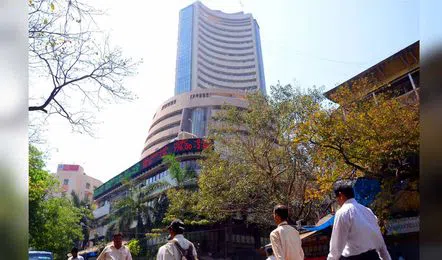
Now the structural capital allocation systems stabilizing South Asia’s premier equity exchanges are demonstrating remarkable upward momentum following a highly favorable alignment of international macroeconomic signals. The benchmark domestic stock indices printed substantial valuation expansions during high-volume opening transactions on Thursday, May 21, 2026. Therefore, dalal street investment managers and institutional portfolio allocators are shifting toward highly confident risk-on configurations across their trading dashboards. The headline BSE Sensex rallied sharply to register a clean intraday peak of 75,945, while the NSE Nifty matched this pace by climbing exactly 200 points higher. Following a simultaneous drop in systemic market fear indicators, executing tactical buy-on-dips strategies has transformed into an absolute mechanical necessity to capture returning foreign fund flows cleanly.
Add businessleague.in as a Preferred Source


Also Read |Tamil Nadu Voter List Purge: 97 Lakh Names Deleted in SIR Phase 1
At a Glance: Thursday Morning Market Performance Matrix
| MARKET METRIC CORRIDOR | INTRA_DAY RECORDED PEAK | PERCENTAGE GROWTH RATE | UNDERLYING SENTIMENT LOG |
| BSE Sensex Index | 75,945 Absolute Top | 0.83 Per Cent Surge | Aggressive multi-sector institutional backing |
| NSE Nifty 50 Pack | 23,859 Absolute Top | 0.84 Per Cent Surge | Heavy capital inflows into realty and cement |
| Nifty Realty Index | Sector-Leading Apex | 1.50 Per Cent Surge | Rapid urban development infrastructure plays |
| India VIX Volatility | Compressed to Around 18 | 4.00 Per Cent Contraction | Easing geopolitical anxiety across oil links |
| Brent Crude Oil Spot | $106.41 Per Barrel Value | 1.32 Per Cent Elevation | Monitoring first-quarter corporate input costs |
The De-Escalation Spark: How Tehran’s Proposal Review Ignited Global Markets
Now the macroeconomic data files compiled by global risk desks prove that geopolitical de-escalation functions as the single most powerful driver for equity appreciation. Financial sentiment across the Mumbai trade hub achieved immediate relief after diplomatic wires confirmed that Iran is actively reviewing Washington’s latest conflict-resolution framework. Therefore, institutional fund managers are unwinding their defensive cash hedges to deploy liquid reserves back into primary commercial equities safely.
First, look at the diplomatic timeline: the market expansion accelerated after US President Donald Trump indicated a willingness to wait several days for Tehran’s formal reply. Next, this balanced diplomatic window reduced the immediate fear of sudden retaliatory strikes targeting critical shipping channels or production fields. Thus, the mechanical necessity of recalibrating global risk premiums was instantly satisfied, triggering massive buying orders across cross-border trading rings.
So the temporary pause in geopolitical hostilities allows international supply networks to stabilize their forward transport projections for the summer session. This cooling of tensions prevents corporate logistics costs from entering a dangerous, un-controllable inflationary cycle that could damage corporate profits. Meanwhile, centralized currency trade rooms are reporting excellent stability across local exchange pairs as global panic vectors fade from headline feeds. Therefore, the de-escalation spark establishes an exceptionally confident operational baseline for the morning trading block.
Sectoral Velocity Profiles: Realty and Cement Lead the Comprehensive Green Sweep
Nowhere does the sheer breadth of this morning market rally manifest more clearly than across the synchronized green indicators lighting up all major sectoral boards. The core momentum was guided by heavy, coordinated institutional buying blocks targeting high-value infrastructure development equities. Therefore, retail trading desks are modifying their short-term momentum trackers to align with these dominant big-money sector choices cleanly.
First, look at the sector-leading velocity numbers: the Nifty Realty index outperformed the broader market by surging an impressive 1.5 per cent. Next, parallel tracking indicators showed that the Nifty Cement index advanced firmly by 1 per cent, while auto, chemical, and media boards posted consistent gains. Thus, the mechanical necessity of deploying capital into physical asset industries is satisfied as domestic building pipelines continue to absorb material inventories.
[Global Geopolitical Tensions Ease Slowly] ──► Compresses Macro Risk Premiums Across Developing Markets
                                                        │
                                                        ▼ (The Institutional Capital Inflow)
[Nifty Sector Indices Print Green Sweeps]     ──► Realty Rallies 1.5% Parallel with a 1% Cement Advance
                                                        │
                                                        ▼
[Smallcap & Midcap Packs Lead the Board]       ──► Microcap 250 Index Climbs Over 1% in Early Transactions
So the smallcap and midcap market segments easily outperformed standard blue-chip benchmarks, with the Nifty Microcap 250 climbing over 1 per cent. This broad secondary market expansion proves that retail risk appetite has returned to the floor, driving healthy volumes into local mid-tier manufacturing firms. Meanwhile, a small group of benchmark laggards, including Infosys, Nestle India, Trent, and Sun Pharma, faced minor profit-taking rotations from fund managers. Therefore, analyzing these sectoral velocity profiles confirms excellent systemic health across the wider domestic corporate ledger.
Also Read |Tamil Nadu Voter List Purge: 97 Lakh Names Deleted in SIR Phase 1
The East Asian Rotation: Diverting AI-Linked Tech Capital to Fair Indian Pockets
Now exploring the structural tracking patterns of foreign portfolio investments exposes a highly profitable regional capital rotation trend. Foreign institutional allocators are expressing growing concerns regarding the highly elevated, potentially bubbly valuations running across AI-linked technology stocks in South Korea and Taiwan. Therefore, global fund directors are systematically cutting back exposure to over-extended microchip indices to reallocate cash into more reliable industrial regions.
-
The Capital Realignment Driving Forces:
-
Valuation Moderation: Multiple domestic market pockets present exceptionally fair historical valuations to foreign entry funds.
-
Sectoral Diversification: Offering global investors safe exposure across heavy manufacturing, banking, and real estate instead of single tech pools.
-
Fund Inflow Security: Easing volatility metrics attract conservative pension capital looking for multi-year capital compounding.
-
Ecosystem Insulation: Shielding investment portfolios from facing sudden technological correction cycles in the hardware space.
-
First, this international fund rotation ensures that domestic banking and consumer goods counters enjoy consistent, stable baseline demand during macro transitions. Next, the entry of these fresh foreign investment blocks helps domestic market valuations stay highly resilient against temporary localized profit-taking corrections. Thus, the mechanical necessity of maintaining strong capital inflows is completely fulfilled by the country’s superior corporate diversification options.
Volatility Compression: Parsing the Causes Behind the 4% India VIX Collapse
Now separating temporary morning price movements from long-term structural trends requires analyzing the dramatic compression hitting the national volatility tracking index. The headline India VIX plummeted over 4 per cent in early morning trade, dropping straight back down to hover around the 18 baseline mark. Therefore, derivatives writing desks are recalculating their option pricing sheets to account for a sharp contraction in immediate market fear variables.
First, this rapid drop in the VIX indicates that options traders have sharply lowered their expectations for sudden, large-scale downside market breaks over the near term. Next, the collapse in implied volatility allows institutional trading desks to write long-term protective calls with much lower insurance premiums. Thus, the system effectively confirms that corporate traders are feeling significantly more comfortable holding extended long equity positions through the week.
[Iran Reviews Diplomatic Peace Proposals] ──► Slashes Implied Systemic Fear Vectors Across Options Desks
                                                    │
                                                    ▼ (The Volatility Compression Phase)
[India VIX Drops 4% to Hover Around 18]   ──► Compresses Option Premiums and Insurance Overhead Costs
                                                    │
                                                    ▼
[Trading Desks Scale Up Long Allocations] ──► Confirms Return of Dominant High-Volume "Buy on Dips" Rules
So the compression of options pricing encourages retail participants to abandon protective short-side hedges to join the primary upward market momentum. This structural shift in option books provides a powerful underlying cushion that shields the main index from facing unexpected mid-day drops. Meanwhile, automated quantitative algorithms are adjusting their sensitivity parameters to favor steady trend-following rules over high-speed defensive trades. Therefore, the volatility collapse parameters provide an exceptionally solid foundation that sustains the broader stock market expansion.
The Earnings Horizon: Weighing Q4 Health Metrics Against Emerging Q1 Energy Headwinds
Now the final definitive analysis balancing over current market valuations requires connecting past corporate scorecards straight with emerging macro energy variables. While fourth-quarter corporate earnings statements have remained largely healthy and robust across primary banking and auto firms, future input expenses demand close tracking. Therefore, financial analysts are cautioning that the operational costs logged today will heavily impact balance sheets during the next fiscal evaluation loop.
First, look at the commodities ledger: international benchmark Brent crude surged 1.32 per cent to settle at $106.41 per barrel, while US WTI touched $100.11. Next, while this elevated energy cost has not yet hurt current corporate reports, the high fuel bills will start hitting manufacturing margins from the first quarter of FY27. Thus, the mechanical necessity of monitoring localized fuel inputs remains a core task for corporate finance officers looking to protect margin projections.
So the ongoing market rally proves that investors are currently prioritizing excellent near-term results over distant energy price challenges. This positive view helps local manufacturing operations raise fresh capital through public markets with exceptionally low transaction friction. Meanwhile, central economic committees are refining energy subsidy architectures to help key industrial sectors manage these high global crude values smoothly. Therefore, the earnings horizon parameters confirm that corporate performance metrics remain well-positioned to support the current valuation expansion.
Also Read |Tamil Nadu Voter List Purge: 97 Lakh Names Deleted in SIR Phase 1
Global Bullish Synchronization: Tracking Multi-Market Triumphs from Wall Street to Tokyo
Now the final definitive framework illustrating the total strength of today’s upward trend is visible across the absolute green synchronization locking global exchanges. From western tech hubs to eastern manufacturing centers, major international trading boards logged massive percentage wins over the last session. Therefore, global market analysts treat this multi-continent rally as an un-edited validation of returning macroeconomic confidence worldwide.
First, look at the spectacular performance across adjacent Asian trading rooms: Japan’s Nikkei exploded upward by over 3 per cent, while South Korea’s KOSPI index recorded a massive, near-vertical surge of more than 7 per cent. Next, this powerful momentum matches a stellar performance on Wall Street, where the S&P 500 closed 1 per cent higher and the tech-heavy Nasdaq locked in a 1.54 per cent triumph. Thus, the mechanical necessity of maintaining absolute alignment with dominant global bull trends is fully met across Mumbai’s trading floors.
So this unified global market advance ensures that domestic asset prices remain supported by an immense wave of international investment confidence. The tight technical coordination maintained between central banks and international trade secretariats builds an exceptionally powerful shield around the global financial system. Meanwhile, international investment teams are expanding their local equity exposure portfolios, confident that the domestic market remains a premium destination for global capital. Therefore, the comprehensive structural updates confirm that India’s equity architecture remains tightly locked into absolute performance coordinates through the changing global landscape of 2026.
FAQ: Navigating the May 2026 Indian Equity Market Expansions
1. What specific record peaks did the Sensex and Nifty hit during early morning trade today? Now, the BSE Sensex jumped 627 points to touch an intraday high of 75,945, while the NSE Nifty advanced 200 points to hit 23,859.
2. Which particular business sector led the morning market gains across the NSE? First, the Nifty Realty index commanded the entire session by surging a powerful 1.5 per cent in early deals.
3. Why did the India VIX volatility index collapse by over 4 per cent this morning? So, the volatility index plummeted because geopolitical tensions in West Asia eased after Iran announced it was reviewing Washington’s latest diplomatic proposals.
4. Where are international crude oil prices trading on the global commodities index today? Next, international benchmark Brent crude rose to $106.41 per barrel, while US WTI crude jumped near the $100.11 per barrel line.
5. Why are global foreign investors diverting capital away from South Korea and Taiwan into India? Now, foreign allocators face concerns over elevated valuations in AI-linked East Asian tech stocks, leading them to reallocate funds to India’s fairly priced market pockets.
6. Which specific benchmark equities emerged as the top laggards during this green morning session? Finally, despite the broad market rally, a few prominent companies like Infosys, Nestle India, Trent, and Sun Pharma emerged as the main laggards.
Also Read |Tamil Nadu Voter List Purge: 97 Lakh Names Deleted in SIR Phase 1
End..
Add businessleague.in as a Preferred Source
🙏 Support Independent Journalism
We keep news free for you.
Most readers support with ₹500 ❤️
or scan QR below

Voluntary contribution. No tax benefits.
DISCLAIMER
We have taken all measures to ensure that the information provided in this article and on our social media platform is credible, verified and sourced from other Big media Houses. For any feedback or complaint, reach out to us at businessleaguein@gmail.com