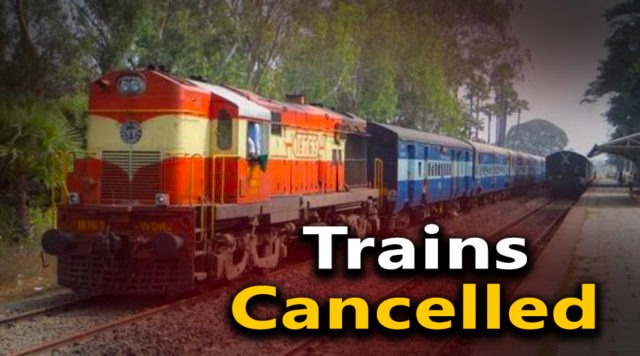
Aiming to deter offenders after collecting a massive ₹1,781 crore in penalty revenue during FY25, the national carrier updates its legal enforcement rules across multiple sections.
In a sweeping legislative tightening designed to guarantee hassle-free transits and curb institutional leakages, Indian Railways has officially rolled out a revised schedule of inflated fines, updated legal penalties, and mandatory prison sentences. The state-run transport network, which moves crores of commuters daily, relies heavily on structural revenue generated from direct ticket allocations, processing cancellation fees, and penalizing code violations.
Add businessleague.in as a Preferred Source


Highlighting the scale of regular rule-breaking, internal accounting logs reveal that Indian Railways collected an unprecedented ₹1,781 crore solely in regulatory penalties from transit offenders during the 2024-25 fiscal year (FY25). The freshly introduced amendments aim to transform public travel discipline by systematically increasing the financial and criminal costs of common violations.
                           [Indian Railways Revenue Reinvestment Engine]
                                                │
         ┌──────────────────────────────────────┼──────────────────────────────────────┐
         ▼                                      ▼                                      ▼
 [Penalty Revenue Core]                [Target Enforcement Areas]             [Structural Objectives]
  • FY25 Collection: ₹1,781 Crore.      • Unauthorised Coach Entries.          • Maximize passenger transit safety.
  • Primary Driver: Ticketless travel,  • Onboard smoking / public nuisance.   • Modernize direct network security.
    hawking, and illegal parking.       • Safety breaches in women's units.    • Eliminate platform infrastructure leaks.
Complete Blueprint of Revised Penalties under the Railway Act
The updated legal landscape scales penalties across core categories, extending from administrative fines to severe, non-bailable judicial detentions:
General Ticketing and Token Breaches
-
Section 137 (Ticketless Travel with Deceptive Intent): Traveling deliberately without a valid pass now incurs the absolute cost of the base fare plus a flat additional minimum surcharge of ₹500. Refusal or failure to settle this fee can trigger an expanded 6-month prison sentence and a court-ordered fine of ₹500 (upgraded from the previous baseline of ₹250).
-
Section 138 (Traveling Unprepared Without Proper Ticket): Commuters found without a valid ticket face a minimum extra charge of ₹500, with the railway administration holding statutory powers to recover unliquidated balances through formal magistrate channels.
-
Section 142 (Transfer or Sale of Personal Tickets): Attempting to travel using a ticket originally issued to another individual results in immediate forfeiture of the pass and a penalty fee of ₹500. Evading payment leads to a potential 6-month prison term and an aggravated cash penalty of 正式 ₹2,000.
Public Conduct, Nuisance, and Operational Obstructions
[Onboard Code Violations logged] ──► Subject to On-Spot Eviction & Forfeiture of Active Transit Passes
                                                 │
                                                 ▼
[Magistrate Court Escalate Layers] ──► Triggers Mandatory Jail Terms and Stacked Financial Levies
-
Section 145 (Intoxication and Abusive Behavior): Creating a public nuisance or operating under the influence triggers immediate 24-hour detention and/or a ₹1,000 fine. Repeat offenders face a 6-month prison sentence, a ₹3,000 fine, or both.
-
Section 146 (Obstructing Railway Staff on Duty): Interfering with train crew or station managers carries a penalty of up to 3 months in jail, a ₹2,500 fine, or both.
-
Section 167 (Smoking inside Trains): Smoking within any train compartment is strictly banned and carries an automated ₹2,000 fine along with immediate ticket forfeiture. Defaulting on the fine can trigger judicial inflation up to ₹5,000 (with a mandatory statutory baseline of ₹2,000).
Detailed Matrix of Spatial, Property, and Structural Violations
To navigate the revised operational codes for space usage and vendor zoning, commuters can reference the systematic table below:
| Section Code | Specific Legal Nature of Offense | Initial Offense Consequence | Secondary / Non-Payment Consequence |
| Section 144 | Hawking and Unauthorized Begging | ₹2,000 upfront fine | Subsequent: Up to 3 months jail or ₹5,000 fine (Mandatory 1-month minimum jail). |
| Section 147 | Trespassing on Rail Tracks / Premises | ₹500 flat penalty | Refusal to pay: 3 months jail or ₹3,000 fine. Repeated acts trigger mandatory 1-month jail & ₹2,000 fine. |
| Section 155 | Unauthorized Entry into Reserved Coaches | ₹2,000 first offense fine | Second instance: ₹1,000. Complete refusal to clear defaults scales up to a mandatory ₹3,000 penalty loop. |
| Section 159 | Unauthorized Vehicle Parking / Obstruction | ₹500 baseline fine | Failure to clear liability: 1 month imprisonment or a ₹1,000 fine. |
| Section 162 | Illegal Entry into Reserved Women’s Coaches | ₹2,500 immediate fine | Non-payment enforces a structural ₹2,000 fine. Note: This offense is strictly non-bailable. |
| Section 163 | Shipping Unreported / Unregistered Freight | Linked to total weight | Valued dynamically based on cargo density metrics evaluated by rail checkers. |
| Section 165 | Carrying Prohibited or Hazardous Goods | Starts from ₹10,000 | Escapes standard administrative compounding; sent straight to criminal court tracks. |
| Section 166 | Selling Commercial Wares Without Licenses | ₹2,000 baseline fine | Repeated violations: 1 month inside a correctional facility or a ₹5,000 fine, or both. |
Statutory Notice: Passengers should note that Section 158 of the central Railway Act has been completely removed and repealed from the enforcement ledger. Meanwhile, illegal corporate touting or unverified agent operations under Section 172 remain fully categorized as non-compoundable criminal actions.
FAQ
Q1: What is the penalty for being caught smoking on an Indian Railways train now?
Under the updated Section 167 regulations, smoking inside a train compartment leads to an immediate ₹2,000 fine and the forfeiture of your active travel ticket or pass. If the offender refuses to pay on the spot, the penalty can scale up to ₹5,000 through legal channels, with a mandatory minimum fine of ₹2,000.
Q2: Is getting into a reserved women’s coach without authorization a bailable offense?
No. Under the revised Section 162 guidelines, unauthorized entry or traveling without a valid ticket inside a women’s reserved coach carries an immediate ₹2,500 fine and is explicitly classified as a non-bailable offense.
Q3: How have the rules changed for repeat trespassers caught walking on railway tracks?
While a first-time trespassing offense under Section 147 incurs a standard ₹500 fine, repeat offenses now trigger a mandatory minimum punishment of 1 month of imprisonment along with a baseline cash fine of ₹2,000.
Add businessleague.in as a Preferred Source
🙏 Support Independent Journalism
We keep news free for you.
Most readers support with ₹500 ❤️
or scan QR below

Voluntary contribution. No tax benefits.
DISCLAIMER
We have taken all measures to ensure that the information provided in this article and on our social media platform is credible, verified and sourced from other Big media Houses. For any feedback or complaint, reach out to us at businessleaguein@gmail.com