


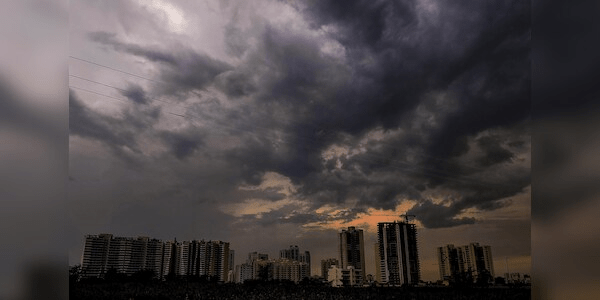
Now the primary driver of India’s agrarian economy is facing its most significant challenge in three years. On Monday, the government officially released the India monsoon forecast 2026, delivering a sobering outlook for farmers and investors alike. First, the Ministry of Earth Sciences expects the four-month rainy season to reach only 92 per cent of the long-period average (LPA). Therefore, the nation is bracing for its first below-average monsoon since 2023. Meanwhile, this climatic shift arrives at a precarious time, as India battles high inflation triggered by the ongoing West Asia war.
Add businessleague.in as a Preferred Source


Also Read |Tamil Nadu Voter List Purge: 97 Lakh Names Deleted in SIR Phase 1
The 92% LPA: Decoding the 2026 Below-Average Forecast
Now we must analyze the specific metrics used by the India Meteorological Department (IMD). First, “normal” rainfall is officially defined as being between 96 per cent and 104 per cent of a 50-year average. Therefore, the India monsoon forecast 2026 at 92 per cent falls squarely into the “below-average” category.
Next, the 50-year average currently stands at 87 cm (35 inches) for the four-month season. Thus, the projected shortfall represents a significant deficit for rain-fed agricultural regions.
[Image showing a bar chart of India’s monsoon performance from 2020 to 2026]
Meanwhile, M. Ravichandran, Secretary in the Ministry of Earth Sciences, noted that this is a departure from the relatively stable rains of the last two years. Therefore, the 2026 season requires heightened vigilance from policymakers. So the “92 per cent” figure is now the most critical number for the nation’s food security planning.
El Niño Arrives: The Pacific Temperature Threat
So what is causing this sudden dip in moisture? The answer lies thousands of miles away in the Pacific Ocean. First, the IMD has observed that weak La Niña-like conditions are currently transitioning to neutral. Therefore, the “cool phase” that supported recent monsoons is ending.
Next, it is “very likely” that El Niño will develop after June. Thus, ocean temperatures in the central and eastern Pacific will rise above normal, disrupting global weather patterns.
Meanwhile, El Niño has historically resulted in hot and dry weather across Southeast Asia. Therefore, the India monsoon forecast 2026 is being suppressed by this powerful oceanic phenomenon. So the timing of El Niño’s development in mid-season is particularly problematic for the sowing of Kharif crops.
Monsoon vs. War: A Double Blow to Indian Inflation
Now we must consider the broader economic context of this dry forecast. First, India is already battling inflation driven by the supply chain disruptions of the West Asia war. Therefore, a poor monsoon would create a “perfect storm” of rising energy and food prices.
Next, below-average rainfall often leads to lower crop yields for staples like rice, pulses, and sugar. Thus, the government may be forced to limit exports to ensure domestic supply.
Inflationary Pressure Points:
-
Energy: War-induced spikes in crude oil and transport.
-
Food: Potential scarcity of water-intensive crops due to 92% LPA.
-
Policy: The RBI may face pressure to maintain high interest rates.
Meanwhile, a shortfall in the monsoon could stall the post-war recovery of Asia’s third-largest economy. Therefore, the India monsoon forecast 2026 is being watched as closely by the Finance Ministry as it is by the farmers.
Also Read |Tamil Nadu Voter List Purge: 97 Lakh Names Deleted in SIR Phase 1
The IOD Savior: Warmer Waters in the Western Indian Ocean
So is there any hope for a recovery later in the season? Actually, yes. First, IMD Director-General Mrutyunjay Mohapatra mentioned that a positive Indian Ocean Dipole (IOD) is likely to develop. Therefore, warmer-than-normal waters in the western Indian Ocean could “pull” moisture back toward the subcontinent.
Next, this phenomenon often acts as a counterweight to the drying effects of El Niño. Thus, the latter part of the monsoon season could see more robust rainfall than the early months.
[Image illustrating the Indian Ocean Dipole with arrows showing moisture flow to India]
Meanwhile, the IOD is a climate pattern marked by temperature differences between the western and eastern Indian Ocean. Therefore, the India monsoon forecast 2026 contains a glimmer of hope for the “retreating” phase in September. So the season might start dry but end with a vital surge in precipitation.
Farm Output Risks: Lessons from Previous Drought Years
Now we should look at the historical impact of similar forecasts. First, in most El Niño years, India has experienced severe droughts that destroyed standing crops. Therefore, the 92 per cent projection is a direct threat to the livelihoods of millions.
Next, previous shortfalls have forced the government to implement “export bans” on essential grains. Thus, global food markets might also feel the ripple effect of India’s dry weather.
Vulnerable Crop Sectors:
-
Rice: Highly dependent on early monsoon rains in July.
-
Pulses: Risk of heat stress during the flowering stage.
-
Sugarcane: Requires high water levels throughout the four-month cycle.
Meanwhile, the lack of rain could also impact reservoir levels used for winter (Rabi) irrigation. Therefore, the India monsoon forecast 2026 affects not just one, but two harvest cycles. So the “92 per cent” forecast is a warning for the entire agricultural supply chain.
Mrutyunjay Mohapatra’s Outlook: Transitioning Weather Patterns
So what does the top weather official think of the current data? First, Mrutyunjay Mohapatra emphasized the “transitioning” nature of 2026. Therefore, we are moving from a favorable La Niña to a hostile El Niño.
Next, he clarified that the 92 per cent forecast takes into account both the Pacific threat and the Indian Ocean support. Thus, the number represents a “net” expectation of the season’s total volume.
Meanwhile, he urged authorities to begin planning for water conservation and crop diversification. Therefore, the India monsoon forecast 2026 is being treated as an “actionable” alert rather than just a prediction. So the IMD will provide monthly updates to help fine-tune these strategies.
Also Read |Tamil Nadu Voter List Purge: 97 Lakh Names Deleted in SIR Phase 1
Timeline of the Season: From Kerala Arrival to September Retreat
Now let’s look at the calendar for the 2026 rainy season. First, the monsoon typically arrives over the southern state of Kerala around June 1. Therefore, the next six weeks are the final window for pre-monsoon preparations.
Next, the season is expected to reach its peak in July and August before retreating by mid-September. Thus, the “El Niño impact” will be most felt during the critical middle months.
2026 Monsoon Calendar:
-
June 1: Expected arrival in Kerala.
-
June – July: Transition to El Niño and potentially dry start.
-
August – September: Potential positive IOD development and recovery.
-
Mid-September: Official retreat begins.
Meanwhile, the distribution of rain is just as important as the total volume. Therefore, the India monsoon forecast 2026 will be monitored for “dry spells” that could last for weeks. So the “92 per cent” might come in bursts rather than a steady flow.
Asia’s Third-Largest Economy: Growth Under the Shadow of El Niño
Finally, we must consider the impact on India’s GDP. First, agriculture still accounts for a significant portion of the country’s employment and growth. Therefore, a below-average monsoon acts as a direct brake on economic expansion.
Next, the government’s battle with inflation becomes much harder when the “rain gods” are not smiling. Thus, consumer spending in rural India—a major driver of the economy—could take a hit.
[Image showing a rural Indian market representing the ‘monsoon economy’]
Meanwhile, the central bank (RBI) will likely keep a hawkish eye on these weather developments. Therefore, the India monsoon forecast 2026 is a primary variable for interest rate decisions this year. So the “92 per cent” forecast is as much a financial headline as it is a meteorological one.
Common Questions Answered
What is the India monsoon forecast 2026? Now the IMD has predicted below-average rainfall, expected to reach 92 per cent of the long-period average (LPA). Therefore, it is the first shortfall in three years.
What is causing the below-average rain this year? First, the primary cause is the likely development of El Niño after June 2026. Thus, warmer Pacific temperatures will likely result in drier weather for India.
Will the entire season be dry? Next, not necessarily. While El Niño is a threat, a positive Indian Ocean Dipole (IOD) is likely to develop later in the season. Therefore, we might see a recovery in August and September.
How does this impact the Indian economy? So a weak monsoon can destroy crops, leading to lower farm output and higher food inflation. Thus, it poses a risk to the growth of Asia’s third-largest economy.
When does the monsoon usually arrive? Finally, it typically reaches Kerala on June 1 and covers the entire country by mid-July. So the “arrival” is still expected on its normal timeline.
What is ‘Normal’ rainfall for India? Actually, the IMD defines normal as between 96 per cent and 104 per cent of the 50-year average. Therefore, the 92 per cent forecast is officially “Below-Average.”
Also Read |Tamil Nadu Voter List Purge: 97 Lakh Names Deleted in SIR Phase 1
End…
Add businessleague.in as a Preferred Source

