
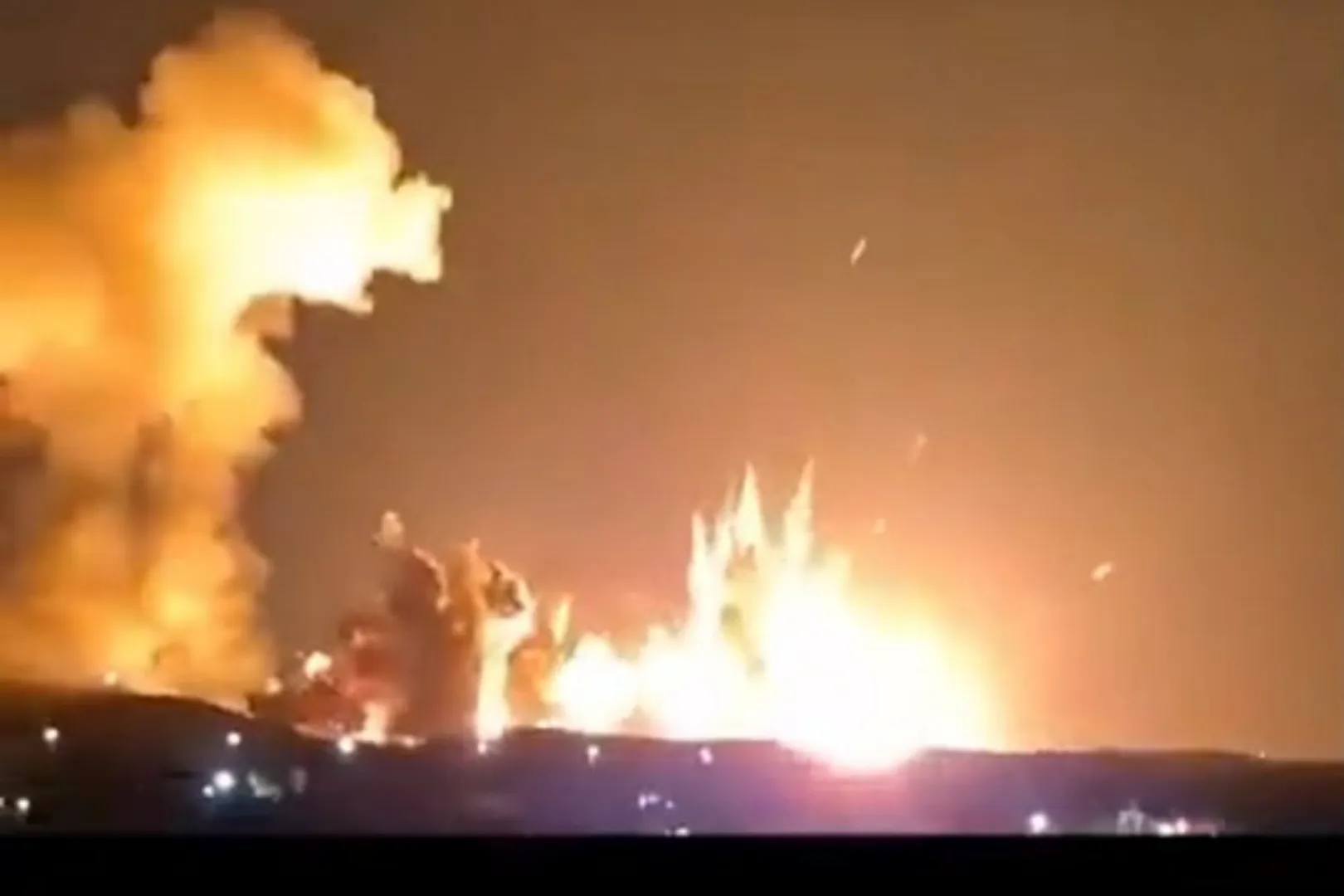
In an unprecedented military escalation, CENTCOM deployed new unmanned sea assets against Iranian coastal defenses, while the IRGC launched counter-strikes targeting US facilities across five Gulf nations.
MANAMA — The Persian Gulf has plunged into a state of high-intensity conflict following an exchange of heavy military strikes between the United States and Iranian forces. The operations have effectively shattered months of backchannel diplomatic efforts aimed at stabilizing the strategic Strait of Hormuz.
Add businessleague.in as a Preferred Source


Also Read | Automated Insurance Settlement: Inside the Aarogya Setu 2.0 App Features Architecture
The escalation began early Sunday when US Central Command (CENTCOM) launched a massive wave of precision munitions targeting sovereign Iranian territory. The operation hit dozens of specialized sites designed to disrupt international energy corridors. In immediate retaliation, Iran’s Islamic Revolutionary Guard Corps (IRGC) commanded coordinated drone and ballistic campaigns against American military command centers scattered throughout the region.
1. The American Offensive: 140+ Targets Submerged Under Fire
According to dynamic data logs released by CENTCOM, the latest operational sweep aggressively expanded the battlefield, striking deeply into coastal and industrial Iranian provinces, including Khuzestan, Hormozgan, and Sistan-Baluchestan.
CENTCOM Expanded Asset Matrix (First-Time Operational Mix):
✈️ US Fighter Aircraft ➔ Precision interior bombardment
🚢 US Naval Surface Vessels ➔ Coastal cruise missile launches
🛩️ One-Way Attack Aerial Drones ➔ Precision radar saturation
🚤 One-Way Attack Sea Drones ➔ Littoral naval asset destruction
The military assets targeted include advanced air defense systems, coastal early-warning radar arrays, concealed ballistic missile warehouses, and fast-attack paramilitary boats.
The Executive Directive: “We bombed the hell out of them last night,” US President Donald Trump announced during an interview on NBC’s Meet the Press, confirming that this third round of operations was far heavier than previous baseline enforcement actions.
Also Read | Automated Insurance Settlement: Inside the Aarogya Setu 2.0 App Features Architecture
However, the precision strikes resulted in immediate collateral damage. Iranian security officials confirmed that a stray American projectile struck an agricultural water pumping station in the Mahshahr district of the Khuzestan province, killing a facility guard and injuring four other workers.
2. The Iranian Counter-Strike: Direct Hits on Regional US Assets
Refusing to yield to western air superiority, the IRGC Aerospace Forces launched dozens of one-way attack drones from domestic batteries, hitting American command clusters across Bahrain, Kuwait, Qatar, Jordan, and Oman.
Conflicting Geopolitical Accounts of the Base Strikes
| Target Location Vector | Iranian Military / IRNA Claims | Western Defense Command Assessments |
| Bahrain Fleet Hub | Successfully destroyed a primary US drone command facility, leveling aircraft hangars and wiping out a deployed drone fleet. | Acknowledged incoming drone swarms; confirmed localized property damage to maintenance structures but denied complete fleet loss. |
| Kuwait Operations (Ali Al-Salem & Ahmad Al-Jaber) | “Destructive drone” networks pierced defense perimeters, neutralizing tactical bunkers and interceptor shields. | Patriot missile defenses engaged multiple targets; secondary debris caused minor infrastructure fire, but runways remain active. |
| Sovereign Border Points (Jordan, Qatar, Oman) | Widespread neutralization of forward-deployed logistics bases supplying the carrier groups. | Confirmed alerts across early warning grids. Minor disruptions reported as regional allies condemn the violations of their airspace. |
3. Total Diplomatic Breakdown in the Strait of Hormuz
The immediate consequence of this open warfare is the destruction of the delicate safety framework that previously protected global commercial shipping. The Strait of Hormuz—which facilitates nearly 20% of the planet’s petroleum and natural gas transit—is now a highly active combat zone.
The Escalation Path of the 2026 Gulf Crisis
The transition from fragile diplomatic agreements to direct cross-border warfare followed a rapid series of steps over the past week.
Also Read | Automated Insurance Settlement: Inside the Aarogya Setu 2.0 App Features Architecture
Iran’s Foreign Ministry stated that the American strikes have permanently undermined the peace initiatives brokered over the past few months. In an official communique, Tehran declared that the actions of the U.S. have single-handedly returned insecurity to the Strait of Hormuz, warning that international trade routes will remain unstable as long as foreign forces remain deployed in their territorial waters.
Also Read | Automated Insurance Settlement: Inside the Aarogya Setu 2.0 App Features Architecture
Add businessleague.in as a Preferred Source
🙏 Support Independent Journalism
We keep news free for you.
Most readers support with ₹500 ❤️
or scan QR below

Voluntary contribution. No tax benefits.
DISCLAIMER
We have taken all measures to ensure that the information provided in this article and on our social media platform is credible, verified and sourced from other Big media Houses. For any feedback or complaint, reach out to us at businessleaguein@gmail.com