


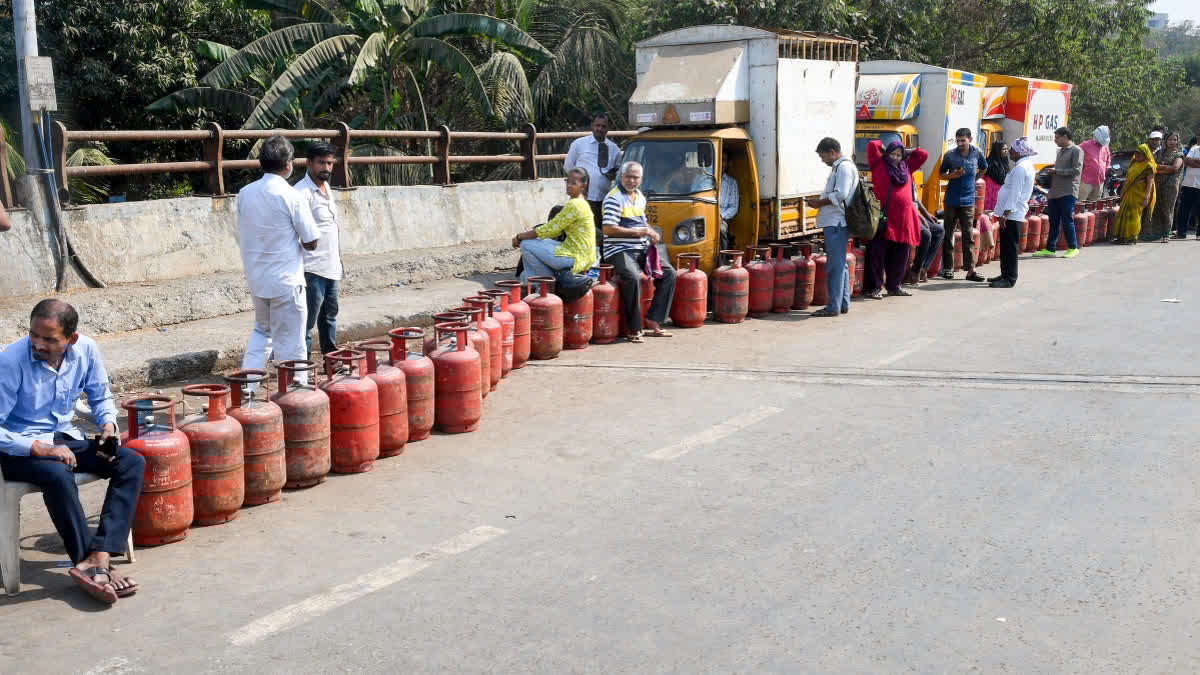
The ripple effects of the ongoing conflict in West Asia have reached Indian kitchens, but the government is moving quickly to prevent a full-scale energy panic. During an inter-ministerial briefing, Joint Secretary Sujata Sharma clarified that while the “situation remains a matter of concern” due to shipping disruptions in the Strait of Hormuz, the domestic supply chain remains intact.
Add businessleague.in as a Preferred Source


Also Read |Tamil Nadu Voter List Purge: 97 Lakh Names Deleted in SIR Phase 1
Panic Booking vs. Reality: The Numbers
The primary challenge currently is not a lack of gas, but a logistical bottleneck caused by a surge in demand.
-
Booking Spike: On March 13, bookings hit nearly 89 lakh in a single day.
-
Normalization: As of Monday, this has slowed to 70 lakh, but the government warns that this volume still strains delivery personnel.
-
The Message: If you have more than 25% gas left in your cylinder, the Ministry asks you to wait before booking your next refill.
The Economic Case: LPG vs. Induction vs. PNG
With LPG prices recently hiking by ₹60 per cylinder (now over ₹915 in many cities), many are looking at the math of switching.
| Metric | LPG (Cylinder) | PNG (Piped Gas) | Induction (Electric) |
| Energy Efficiency | ~40-55% | ~40-55% | ~85-90% |
| Monthly Cost | ₹900 – ₹1,100 | ₹550 – ₹650 | ₹600 – ₹800 |
| Initial Setup | ₹1,500 (Deposit) | ₹6,000 – ₹20,000 | ₹2,000 – ₹5,000 |
| Risk Factor | High (Storage) | Moderate (Leaks) | Lowest |
Also Read |Tamil Nadu Voter List Purge: 97 Lakh Names Deleted in SIR Phase 1
Switching to PNG: The 24-Hour Fast-Track
To nudge urban users away from cylinders, the Centre has directed State governments to expedite PNG infrastructure.
-
Express Approval: New PNG applications are now being targeted for 24-hour approval.
-
Mandatory Surrender: If your society has PNG, an amendment to the LPG Control Order (March 14, 2026) now prohibits you from holding a domestic LPG connection simultaneously.
Reality Check
While the government claims refineries are at “high capacity,” the reality is that India imports roughly 45-50% of its LPG consumption. Therefore, if the Strait of Hormuz remains contested for more than three months, even “high capacity” refineries may face a crude oil feedstock issue. The advice to switch to induction is as much about national energy security as it is about consumer cost-savings.
The Loopholes
The government states there is “no dry-out situation.” In fact, this is a “Technical Loophole”—while the distributors may have gas in their godowns, the delivery timelines have stretched from 24 hours to 5-7 days in some parts of North India due to the booking backlog. Therefore, the gas exists, but it might not reach your kitchen as fast as usual. Still, the “Induction Loophole” remains; while induction is cheaper per meal, the hidden cost is compatible cookware (magnetic stainless steel or cast iron), which can add ₹3,000 to your initial transition budget.
Also Read |Tamil Nadu Voter List Purge: 97 Lakh Names Deleted in SIR Phase 1
What This Means for You
If you are still using LPG, now is the time to buy a basic induction cooktop as a backup. First, realize that an entry-level 1600W-2000W induction stove costs roughly ₹2,000, which is less than the black-market price of a single cylinder.
Then, if you decide to switch, understand that you can convert your existing gas stove to PNG for a small fee (replacing the nozzles) rather than buying a whole new stove. Finally, understand that conserving fuel—such as using lids while cooking and soaking pulses before boiling—can extend a single cylinder’s life by up to 15%.
What’s Next
Expect raids on distributors to increase this week as the government targets “black marketing” and hoarding. Then, look for State-run electricity boards to offer special “E-Cooking” slabs or rebates to encourage the shift. Finally, expect the 2026-27 Union Budget to include higher subsidies for Piped Natural Gas infrastructure as India tries to permanently decouple its kitchens from Middle Eastern shipping routes.
Also Read |Tamil Nadu Voter List Purge: 97 Lakh Names Deleted in SIR Phase 1
End…..
Add businessleague.in as a Preferred Source

