


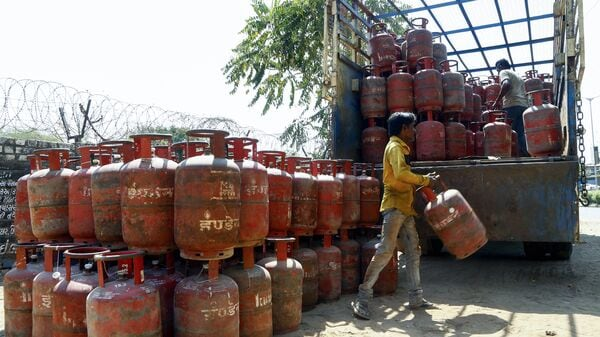
The Ministry of Petroleum confirms the country holds a comfortable two-month inventory reserve of crude and LPG, while Oil Marketing Companies lock in current baseline city tariffs.
Add businessleague.in as a Preferred Source


The international logistics networks regulating global energy transit and subcontinental cooking fuel allocations have entered a highly anticipated phase of stabilization. Issuing an emergency updates dispatch from the U.S. Central Command (CENTCOM), Washington officially announced that it has lifted its maritime blockade on all commercial vessels navigating through the strategic Strait of Hormuz. Following the signing of a preliminary Memorandum of Understanding (MoU) between the U.S. and Iran, the sudden reopening of this vital chokepoint has caused global oil markets to breathe a sigh of relief, resetting the trajectory for the LPG PNG cylinder prices June 2026 ledger.
The dramatic geopolitical breakthrough provides immediate relief for retail energy distributors.
The months-long naval standoff across the Persian Gulf had severely choked out India’s energy supply lines, leading to localized fuel shortages and driving a recent ₹29 spike in domestic cylinders.
With 15 stranded tanker vessels carrying crude oil, LNG, and LPG now cleared for safe passage toward subcontinental refineries, the intense structural pressure on domestic cooking gas tariffs is projected to dissolve over the coming weeks.
Also Read | Viral Trump Lookalike Buffalo Rescue: Saved From Eid Sacrifice
The Domestic Grid: Current City-Wise Cooking Gas Architecture
Despite the positive signs in global crude markets, state-run Oil Marketing Companies (OMCs) are maintaining their current retail pricing cards for the current weekly cycle. This ensures that current commercial and domestic distributions clear existing high-cost inventories systematically.
1. Baseline Domestic Cooking Gas Tariffs (14.2 kg Cylinders)
For ordinary households utilizing standard red cylinders, the current retail baseline remains fixed at the post-increase mark. Refiners are keeping these prices steady to protect local consumers while waiting to see how global markets react to the opening of the shipping lanes.
2. Commercial Distribution Tariffs (19 kg Cylinders)
The restaurant and industrial sectors continue to pay the higher rates established during the June 1 pricing adjustment, which saw commercial cylinders climb by ₹42 to ₹53.50. This change was caused by high maritime insurance premiums that accumulated right before the diplomatic breakthrough.
Slicing Through the City-Wise Energy Pricing Ledger
To help retail managers and household accountants plan their monthly utility budgets, the state energy desk has released its comprehensive city-specific retail price sheet:
| Target Consumption Metro | Domestic LPG (₹/14.2kg) | Commercial LPG (₹/19kg) | Piped Natural Gas (₹/SCM) | Immediate Operational Impact |
| Delhi NCR Region | ₹942.00 Baseline | ₹3,113.50 Per Unit | ₹47.90 Standard Rate | Dictates baseline cooking expenses for northern supply lines. |
| Mumbai Financial Hub | ₹941.50 Lowest Base | ₹3,067.50 Lowest Base | ₹50.00 Standard Rate | Secures lowest fuel input costs across major industrial ports. |
| Bengaluru IT Hub | ₹944.50 Baseline | ₹3,198.00 Per Unit | ₹52.00 Standard Rate | Reflects minor transit expenses added over interior lines. |
| Chennai Coastal Hub | ₹957.50 Baseline | ₹3,283.00 Per Unit | ₹50.00 Standard Rate | Establishes uniform pricing bars for southern distributions. |
| Kolkata Eastern Hub | ₹968.00 Baseline | ₹3,255.50 Per Unit | ₹50.00 Standard Rate | Accounts for local state levies across eastern river borders. |
| Hyderabad Center | ₹994.00 Peak Tier | ₹3,367.00 Peak Tier | ₹51.00 Standard Rate | Marks peak national pricing due to long pipeline transits. |
Note: Piped Natural Gas (PNG) rates are calculated and billed per Standard Cubic Meter (SCM), running on separate infrastructure channels that remain insulated from ocean container shipping bottlenecks.
The underlying technical text of the oil ministry briefing shows that the country’s energy security layers are well-protected against short-term trade shocks.
Addressing an inter-ministerial panel, Sujata Sharma, Joint Secretary in the Ministry of Petroleum and Natural Gas, confirmed that India holds sufficient oil, LNG, and LPG inventories to power the economy for around two months.
Because national refineries are operating at maximum capacity and public sector OMCs are coordinating their deliveries efficiently, retail networks are well-equipped to keep supplies flowing smoothly to consumers.
Also Read | Viral Trump Lookalike Buffalo Rescue: Saved From Eid Sacrifice
Five Sequence Steps to Track and Validate Your Utility Bill Calculations
To ensure your commercial establishment or household is billed accurately according to the official mid-June price sheets, energy compliance teams recommend using this verification sequence:
The geopolitical landscape remains closely monitored, as U.S. warships choose to stay in the Persian Gulf to oversee compliance with the newly signed ceasefire.
By utilizing our robust two-month emergency energy reserves and leveraging the reopening of major shipping routes, the country is navigating this global supply crunch smoothly.
Following official city pricing sheets and completing necessary identity updates ensures you can manage your home or business utilities efficiently, keeping your operations fully insulated as international energy markets return to normal.
FAQ Section
What are the current domestic LPG cylinder rates across Delhi and Mumbai under the LPG PNG cylinder prices June 2026 ledger?
For the current mid-June cycle, the retail price for a standard 14.2 kg domestic cooking gas cylinder is set at ₹942.00 in Delhi and ₹941.50 in Mumbai. These baseline consumer rates are expected to experience a downward adjustment next month as cheaper fuel shipments begin arriving through the reopened Strait of Hormuz.
Why are commercial 19 kg cylinder costs currently trailing at higher price tiers?
Commercial 19 kg cylinders are currently priced at ₹3,113.50 in Delhi and ₹3,067.50 in Mumbai. These higher rates reflect a series of price adjustments implemented by state OMCs on June 1, which factored in steep high-seas insurance premiums that built up right before the maritime blockades were lifted.
Does the country hold enough emergency energy reserves to survive unexpected international shipping stops?
Yes. The Ministry of Petroleum and Natural Gas has formally confirmed that the nation maintains robust, well-distributed inventories of crude oil, LPG, and liquefied natural gas (LNG) sufficient to sustain normal economic activity for approximately two months, providing an excellent protective buffer against international energy shocks.
Also Read | Viral Trump Lookalike Buffalo Rescue: Saved From Eid Sacrifice
End…
Add businessleague.in as a Preferred Source

