
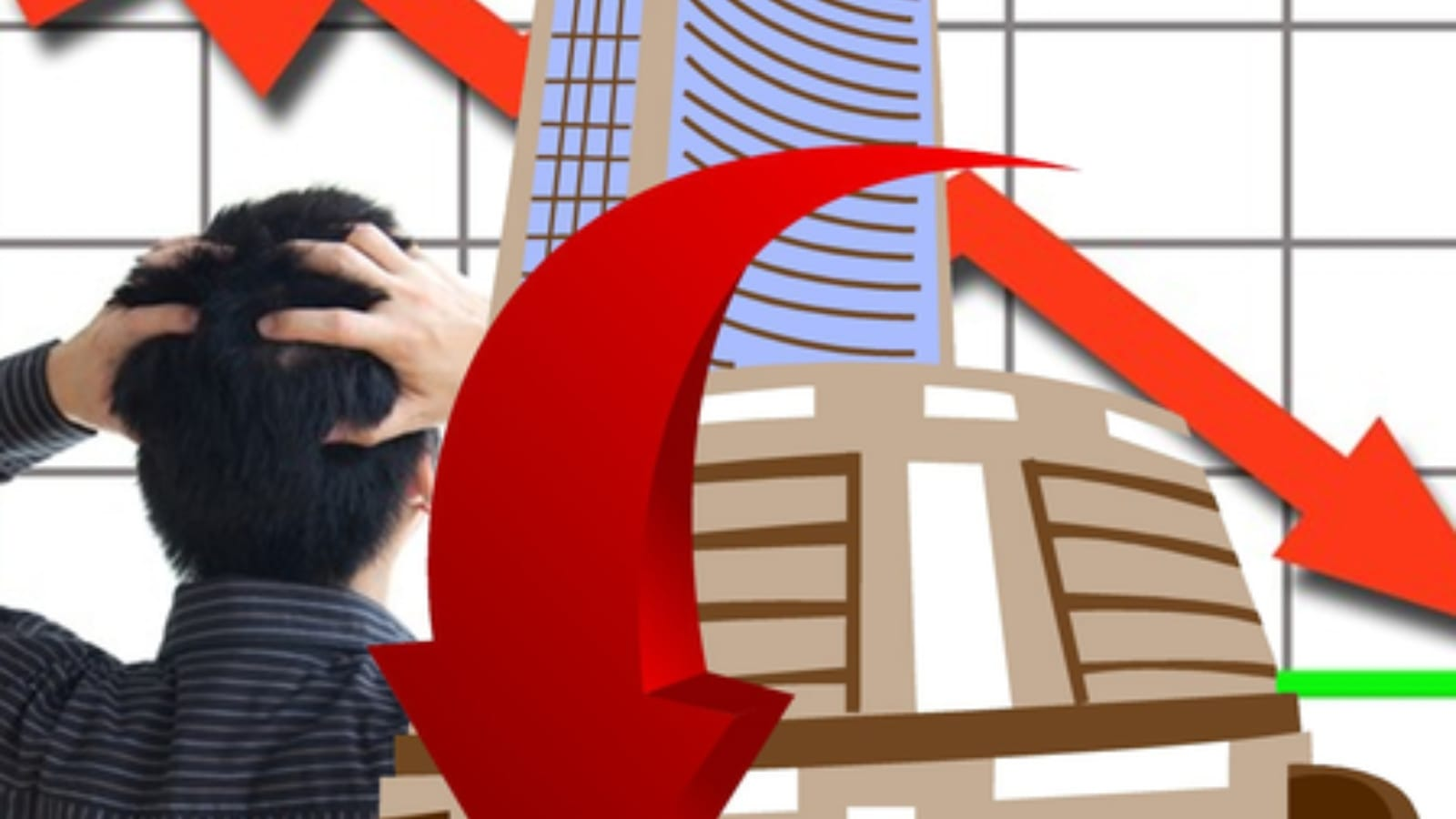
A sudden missile exchange in West Asia drives oil prices higher and hurts retail portfolios, leaving market experts watching the critical 23,000 support level.
Add businessleague.in as a Preferred Source


Indian equity markets faced intense selling pressure during Monday’s session as global risk-off indicators triggered a sharp Nifty multi district market crash June 2026. The sudden drop was driven by reports confirming that Iran launched a heavy ballistic missile barrage at Israeli military centers. This military escalation has broken a two-month-old spring truce and ended hopes of an immediate diplomatic breakthrough between Washington and Tehran.
The return of open warfare to the Persian Gulf has raised immediate concerns regarding maritime trade security and potential disruptions to the global oil supply. This anxiety drove Brent crude futures up by more than 3% to settle comfortably above $96 a barrel. For an import-dependent economy like India, higher energy costs present a direct threat, stoking local wholesale inflation concerns and squeezing corporate operating margins across key manufacturing sectors.
Also Read | Viral Trump Lookalike Buffalo Rescue: Saved From Eid Sacrifice
Tectonic Support Levels Under Pressure
The benchmark Nifty 50 index faced steady selling throughout the day, with institutional liquidations picking up speed during afternoon trading. Foreign Institutional Investors (FIIs) maintained a cautious stance, unwinding leveraged long positions as European markets opened in the red.
Technical analysts note that the index is testing key psychological support boundaries that have held firm since early spring.
Technical Market Commentary: “A decisive move above immediate resistance levels will be required to improve the underlying market structure and trigger any meaningful recovery,” a leading institutional technical analyst stated. “On the downside, 23,100 remains the immediate support to watch. A breakdown below this level could accelerate selling pressure towards the crucial 23,000 mark.”
Broader Markets Experience Steeper Losses
While the blue-chip Nifty 50 index showed some resilience, broader retail portfolios bore the brunt of the afternoon sell-off. High-valuation segments experienced heavy profit-taking as retail traders rushed to raise cash reserves.
| Sectoral Index Layer | Single-Session Performance | Real-World Operational Vulnerability |
| Nifty SmallCap Index | Collapsed 2.88% | Highly vulnerable to sudden shifts in retail liquidity and risk-off sentiment. |
| Nifty MidCap Index | Declined 1.66% | Hammered by institutional fund managers adjusting exposure ahead of macro updates. |
| Nifty Realty & Metal | Major Underperformers | Directly impacted by rising input material costs and global supply chain bottlenecks. |
| Nifty Auto Index | Strong Selling Pressure | Facing potential demand slowdowns if fuel prices remain elevated through the summer. |
| Nifty Healthcare Index | Outperformed the Broader Market | Managed relative resilience as capital rotated into defensive, non-cyclical safe havens. |
The sharp divergence between the defensive healthcare sector and cyclical industries like metals and auto highlights the defensive strategy currently dominating trading desks.
Also Read | Viral Trump Lookalike Buffalo Rescue: Saved From Eid Sacrifice
Macroeconomic Tailwinds Hit a Wall
The rapid drop on Dalal Street shows how closely domestic valuations remain tied to global geopolitical events. Financial planners emphasize that the correction is not driven by internal corporate issues, but by a major change in international energy pricing.
As external investment desks monitor the situation in the Middle East, local brokerage houses urge retail investors to avoid panic-selling into automated market declines.
The upcoming trading sessions will serve as an important indicator of domestic market strength. If the Nifty 50 can successfully defend its 23,000 baseline, the correction could provide a healthy entry point for long-term capital looking to participate in India’s broader economic growth. However, if the geopolitical crisis deepens and oil pushes toward triple digits, the market may need to adjust to a lower trading range for the second half of the year.
FAQ Section
What caused the Nifty multi district market crash June 2026?
The sharp market decline was triggered by a combination of global risk-off cues, including reports that Iran fired ballistic missiles at Israel. This escalation raised concerns over oil supply disruptions, driving Brent crude prices above $96 a barrel and fueling inflation worries.
Which market sectors suffered the heaviest losses during the session?
Broader markets saw the steepest declines, with the Nifty SmallCap index dropping 2.88% and the Nifty MidCap index falling 1.66%. Sectorally, Nifty Realty, Nifty Metal, and Nifty Auto underperformed the most, while Nifty Healthcare managed to buck the trend.
What are the critical technical support levels to watch for the Nifty 50?
Market experts have identified 23,100 as the immediate technical support level to watch. A clean break below this threshold could trigger automated stop-loss programs, accelerating selling pressure down toward the crucial 23,000 psychological baseline.
Also Read | Viral Trump Lookalike Buffalo Rescue: Saved From Eid Sacrifice
End..
Add businessleague.in as a Preferred Source
🙏 Support Independent Journalism
We keep news free for you.
Most readers support with ₹500 ❤️
or scan QR below

Voluntary contribution. No tax benefits.
DISCLAIMER
We have taken all measures to ensure that the information provided in this article and on our social media platform is credible, verified and sourced from other Big media Houses. For any feedback or complaint, reach out to us at businessleaguein@gmail.com