The External Affairs Minister states the 26/11 era of zero consequences is permanently closed, while defending India’s multi-layered ties with Iran, Israel, and Washington amid ongoing regional wars.
Add businessleague.in as a Preferred Source


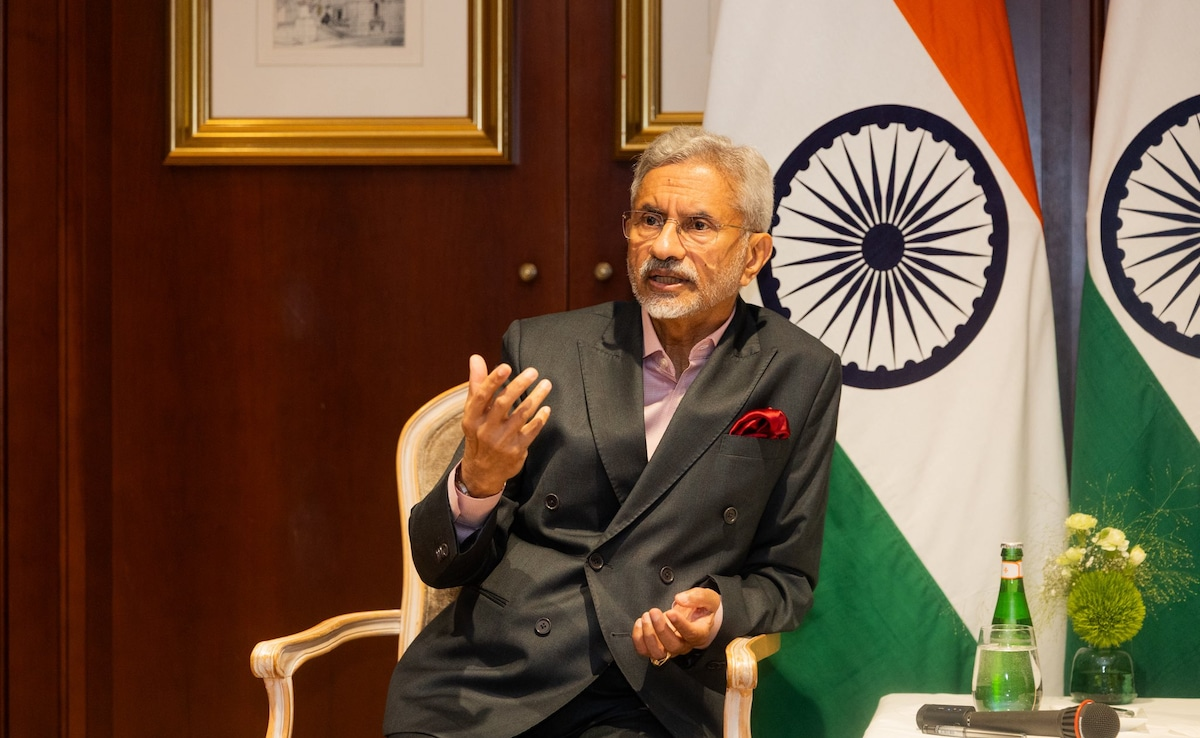
The doctrinal foundations guiding India’s current foreign policy have been laid out with absolute clarity. Speaking in an extensive, high-profile broadcast interview with Doordarshan on Tuesday, External Affairs Minister Dr. S. Jaishankar issued a severe, uncompromising EAM Jaishankar cross border terrorism warning to Pakistan, declaring that the historical era of consequence-free proxy operations against Indian soil is permanently over.
Reflecting on legacy security deficits, Jaishankar pointed directly to the handling of the 2008 Mumbai attacks as a structural mistake that will not be repeated under the current administration. “You have to ensure there are consequences of cross-border terrorism,” Jaishankar stated with absolute emphasis. “It’s something that will never be cost-free. Nobody wants to see what happened on 26/11 again. 26/11 was cost-free for Pakistan. That should never happen again.”
Also Read | Viral Trump Lookalike Buffalo Rescue: Saved From Eid Sacrifice
The Architecture of Strategic Autonomy
Throughout the analytical review, Jaishankar framed India’s diplomatic operations around the core principle of strategic autonomy. While many Western democracies traditionally consolidated their defense planning under the umbrella of American security frameworks, the External Affairs Minister noted that current global instabilities have forced those same countries to rethink their dependence on single allies.
This independent positioning allows New Delhi to maintain deep, productive relationships across highly volatile global dividing lines without getting drawn into third-party conflicts.
Navigating the West Asian Crisis Trough
Jaishankar’s defense of strategic autonomy was particularly clear when discussing India’s balanced approach to the ongoing crisis in West Asia. Despite intense regional conflicts and shifting sanctions frameworks, India continues to manage active relationships with competing global powers.
| Global Geopolitical Partner | Primary Strategic Vector Value | Core Intersectional Interest Challenge |
| The United States | Top-tier technology sharing and primary economic trade integration. | Requires constant management to protect India’s defense ties with Eurasia. |
| State of Israel | Trusted security hardware developer and intelligence-sharing partner. | Requires balance against long-standing regional ties across Arab states. |
| Islamic Republic of Iran | Vital geographic trade gateway (Chabahar Port); historic energy supplier. | Active trade growth remains heavily limited by strict Western sanctions arrays. |
| GCC Cooperatives | Critical home to millions of Indian expats; massive investment capital. | Demands absolute regional shipping security along maritime trade channels. |
The Minister emphasized that while strict international sanctions have temporarily restricted direct oil imports from Tehran, Iran remains a critical partner with deep historical intersections.
Concurrently, India continues to expand its high-tech security and defense partnerships with the United States and Israel. By preserving these distinct relationships, New Delhi ensures that its final decision-making power remains entirely independent, refusing to pledge its allegiance to any single voting block.
Also Read | Viral Trump Lookalike Buffalo Rescue: Saved From Eid Sacrifice
Historical Lessons: Calling Out the China Mistakes of the 1950s
In a blunt look back at India’s post-independence diplomacy, Jaishankar expressed deep confusion over the political decisions made by earlier administrations during the 1950s.
The External Affairs Minister noted that India spent precious diplomatic capital advocating for China’s permanent seat on the United Nations Security Council, often alienating key partners like the United States in the process. “I am baffled why we spent so much political capital when there was no gain to the Indian people,” he observed, contrasting that idealistic approach with today’s focus on national interest.
Turning to current relations with Beijing, Jaishankar stated that the border situation has relatively settled down following years of high-altitude standoffs. He credited this stability to strong, mirror-image troop deployments along the Line of Actual Control (LAC).
By using the successful normalization of ties with Bangladesh—where targeted economic incentives completely cleared out insurgent camps in the Northeast—as a model, Jaishankar showed that modern Indian diplomacy is focused entirely on practical, national goals. New Delhi enters the mid-2026 global cycle with clear eyes, ready to turn its diplomatic connections into real safety and growth for its people.
FAQ Section
What was the core of the EAM Jaishankar cross-border terrorism warning?
External Affairs Minister Dr. S. Jaishankar stated that any future state-sponsored terror attacks launched from Pakistani soil will face immediate, severe consequences. He emphasized that the era of the 26/11 Mumbai attacks, which he described as “cost-free for Pakistan,” is permanently over.
How does India maintain its independent foreign policy amid the West Asia crisis?
India operates under a framework of strategic autonomy, choosing to maintain independent, interest-driven relationships across conflict lines. This allows New Delhi to preserve vital ties with Iran for geographic transit while simultaneously expanding high-tech security and intelligence partnerships with the United States and Israel.
Why did Jaishankar criticize India’s historical diplomatic support for China?
Jaishankar expressed confusion over India’s foreign policy during the 1950s, when New Delhi spent substantial political capital pushing for China’s permanent membership in the United Nations. He noted that this idealistic strategy alienated traditional partners like the US while delivering zero real benefits to the Indian population.
Also Read | Viral Trump Lookalike Buffalo Rescue: Saved From Eid Sacrifice
End….
Add businessleague.in as a Preferred Source
🙏 Support Independent Journalism
We keep news free for you.
Most readers support with ₹500 ❤️
or scan QR below

Voluntary contribution. No tax benefits.
DISCLAIMER
We have taken all measures to ensure that the information provided in this article and on our social media platform is credible, verified and sourced from other Big media Houses. For any feedback or complaint, reach out to us at businessleaguein@gmail.com