


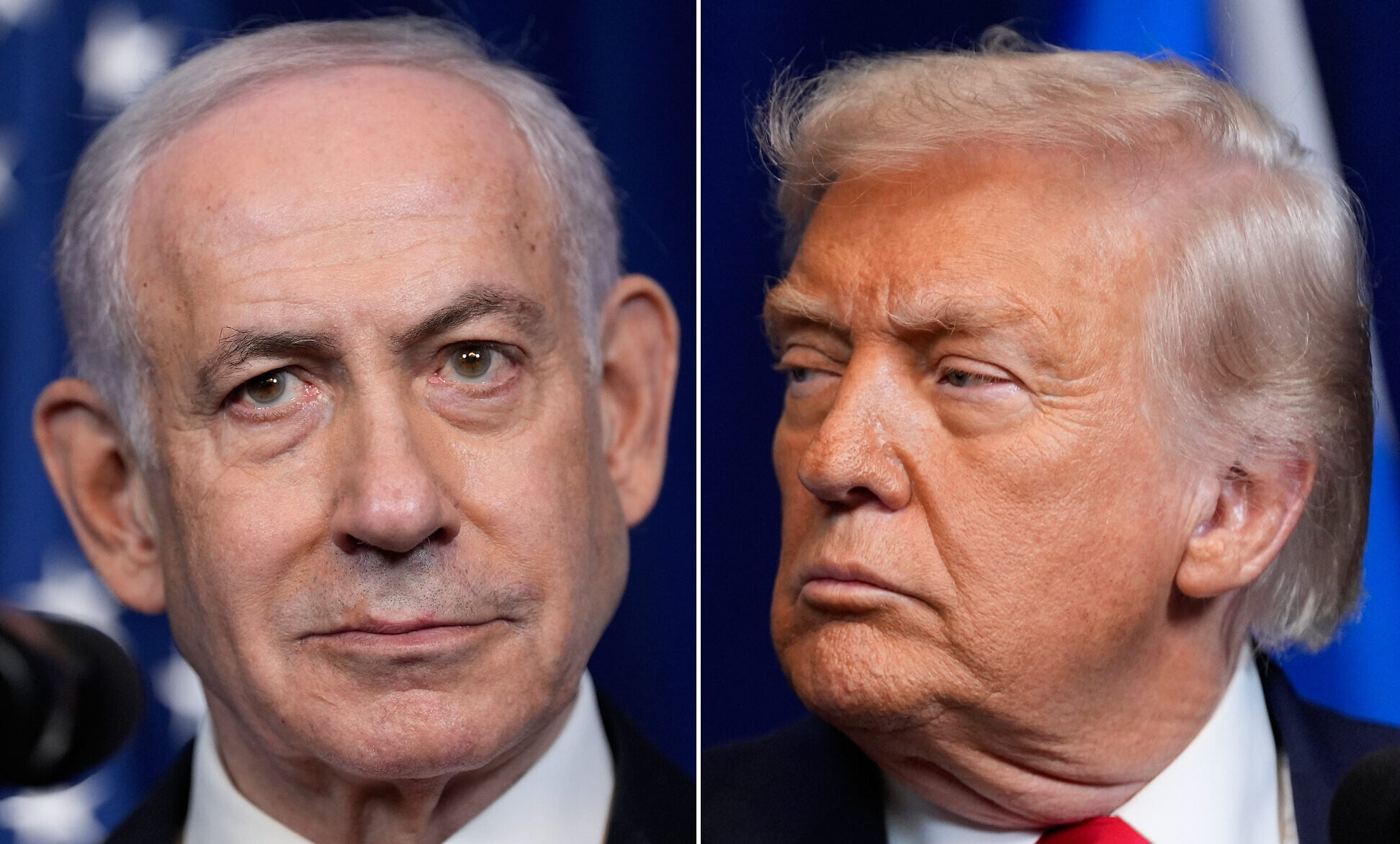
Leaked phone call details an absolute White House mandate to Tel Aviv, shifting diplomatic baselines as the regional war passes its 100th consecutive day of missile exchanges.
Add businessleague.in as a Preferred Source


The geopolitical foundations connecting Washington and Tel Aviv have faced their most severe structural shock in decades. In a leaked telephonic exchange confirmed by Axios, United States President Donald Trump issued an explicit, high-stakes ultimatum to Israeli Prime Minister Benjamin Netanyahu. The President warned that Israel risks fighting completely isolated if it executes another large-scale military strike against mainland Iran, sparking intense global speculation: Will the US abandon Israel Iran war alliances?
The unprecedented conversation reveals a sharp shift in tone between the two traditional allies. It comes at a critical time, as back-channel negotiations to preserve a fragile regional ceasefire hang in the balance. In a direct quote provided to Axios, Trump recounted his warning to the Israeli leader: “Bibi, you have to be careful, or you may soon find yourself alone.” The statement signals a guarded new stance from the White House, making it clear that American military backing is no longer guaranteed if Israel ignores regional de-escalation targets.
Also Read | Viral Trump Lookalike Buffalo Rescue: Saved From Eid Sacrifice
Slicing Through the 100-Day Conflict Axis
The explosive diplomatic rift opens just as the direct military confrontation between Israel and Iran crosses the 100-day mark. This milestone follows months of retail air strikes, ballistic missile volleys, and drone interceptions that have severely tested Middle Eastern defense networks.
While both Tel Aviv and Tehran publicly claim they are acting defensively, the continuous cycle of strikes has created a dangerous pattern that the Trump administration is determined to break. The White House is balancing visible deterrence with active, indirect diplomatic engagement with Tehran to prevent the conflict from expanding into an uncontainable regional war.
The Realities of Allied Support: Deterrence vs. Isolation
The emerging split highlights a fundamental mismatch between the strategic goals of the two nations. While Israel views any permanent Iranian nuclear capability as an immediate threat to its survival, the Trump administration views an open-ended Middle Eastern war as a direct threat to its domestic economic agenda.
| National Strategy Vector | The Official Tel Aviv Stance | The Active White House Doctrine |
| Primary Military Target | Absolute destruction of Iran’s hardening nuclear enrichment centers. | Preventing energy corridor closures; stabilizing global oil prices under $75. |
| Logistical Dependency | Relies heavily on continuous U.S. munitions transfers and satellite arrays. | Restricting automated ammunition delivery files to prevent open-ended conflicts. |
| Diplomatic Engagement | Rejects any back-channel negotiations that allow Iranian regional influence. | Pursuing back-channel economic negotiations to freeze enrichment programs. |
| Worst-Case Contingency | Prepares for a multi-front air and ground war against regional proxies. | Threatens to leave Israel strategically isolated if it ignores White House directives. |
The administration’s primary goal is to prevent the United States from being drawn into another long, costly conflict that could disrupt global supply chains and cloud energy markets. By explicitly telling Netanyahu that Israel could find itself operating alone, Trump is leveraging Washington’s role as Israel’s primary supplier of precision guided weapons and air-defense components to force compliance.
Also Read | Viral Trump Lookalike Buffalo Rescue: Saved From Eid Sacrifice
The Changing Landscape of Middle Eastern Alliances
This public warning has reshaped how diplomatic circles evaluate security arrangements in the region. The idea that the United States would limit its support during an active war with Iran was once considered impossible, but it has now become an active variable in regional defense planning.
This structural shift has forced international partners, including India, to quickly adjust their security assumptions. The Ministry of External Affairs in New Delhi recently issued an urgent travel advisory directing all Indian nationals to avoid travel to the region and look for immediate evacuation options out of Iran.
The Geopolitical Reality: The leak confirms that the White House is prioritizing international trade stability and domestic economic insulation over unmanaged allied operations. While Trump remains committed to shielding Israel from unprovoked destruction, his message to the Knesset is unmistakable: if Israel chooses to expand the war independently, it must be prepared to face the military and economic consequences on its own.
FAQ Section
Did Donald Trump state that the US would abandon Israel in an expanded Iran war?
President Trump told Prime Minister Benjamin Netanyahu that Israel risks being left strategically isolated if it initiates another large-scale strike on Iran. In a leak confirmed by Axios, Trump warned, “Bibi, you have to be careful, or you may soon find yourself alone.”
Why is the White House limiting its military backing for Israel?
The Trump administration is focused on preventing the United States from being pulled into another costly, open-ended regional conflict. Washington is prioritizing global supply chain stability and energy corridor security, using its role as Israel’s primary arms supplier to discourage further escalation.
How long has the direct military conflict between Israel and Iran been active?
The direct military confrontation has officially passed the 100-day mark, shifting from traditional proxy conflicts into direct missile and drone exchanges. This prolonged instability has forced global powers, including India, to issue urgent travel and evacuation notices for their citizens in the region.
Also Read | Viral Trump Lookalike Buffalo Rescue: Saved From Eid Sacrifice
End..
Add businessleague.in as a Preferred Source

