


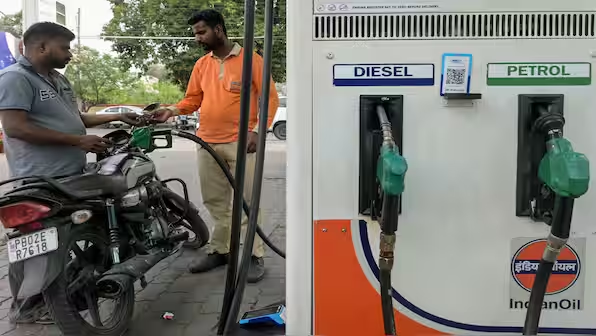
Driven by diplomatic breakthroughs in Qatar and the normalization of maritime traffic through the Strait of Hormuz, key energy products witness their first major price contractions of the year.
NEW DELHI — In a major development for both industrial consumers and retail buyers, a wave of substantial price reductions has hit commercial liquefied petroleum gas (LPG), petrol, diesel, and aviation turbine fuel (ATF) across India. The broad rollbacks bring immediate economic relief following a global energy crisis triggered by the West Asia conflict, which had been driving global oil benchmarks upward since February 28.
Add businessleague.in as a Preferred Source


The price drops follow reported progress in technical negotiations between US and Iranian officials in Qatar, coordinated by American negotiators Jared Kushner and Steve Witkoff. With geopolitical anxieties subsiding, international energy channels are stabilizing, immediately lowering overhead costs across major sectors.
Commercial LPG Rates Slashed by Over ₹180
Oil marketing companies executed a sharp downward revision for commercial LPG cylinders, used extensively across the hospitality, hotel, and restaurant sectors. The price of a standard 19-kg commercial cylinder was reduced by ₹183.50.
Also Read | Bengaluru Daycare Horror: 5 Caregivers Booked After Appalling Child Abuse Surfaces
City-Wise Commercial LPG Tariff Matrix (Per 19-kg Cylinder):
New Delhi: █ ₹2,930.00
Mumbai:    █ ₹2,885.50
Bengaluru: █ ₹3,021.00
Kolkata:   █ ₹3,081.50
Chennai:   █ ₹3,106.00
Hyderabad: █ ₹3,191.00
This represents the first major rate reduction for the fuel type this calendar year, pulling the cost of a 19-kg unit down to ₹2,930 in the national capital. The correction comes directly on the heels of a historic pricing peak recorded last month, when retail commercial LPG spiked to an all-time high of ₹3,113 per cylinder.
Nayara Energy Leads Retail Petrol and Diesel Reductions
In the retail automotive sector, Nayara Energy—India’s largest private fuel retailer—announced an independent price cut across its network of over 7,000 national fueling stations. The private vendor slashed petrol prices by ₹5 per litre and diesel by ₹3 per litre.
Notably, Nayara was the first fuel distributor to aggressively scale up consumer tariffs when the US-Iran conflict initially peaked in March. While private pump rates will vary minorly across different states based on localized value-added tax (VAT) structures and provincial tariffs, the benchmark rates for state-owned public sector fuel retailers remain frozen and unchanged for the time being.
Localized Fuel Price Benchmarks (Per Litre):
-
New Delhi: Petrol: ₹102.12 | Diesel: ₹95.20
-
Mumbai: Petrol: ₹111.21 | Diesel: ₹97.83
-
Bengaluru: Petrol: ₹111.68 | Diesel: ₹99.56
-
Kolkata: Petrol: ₹113.51 | Diesel: ₹99.82
-
Chennai: Petrol: ₹107.76 | Diesel: ₹99.55
-
Hyderabad: Petrol: ₹115.69 | Diesel: ₹103.82
Also Read | Bengaluru Daycare Horror: 5 Caregivers Booked After Appalling Child Abuse Surfaces
Aviation Sector Boost: Jet Fuel Plummets ₹5 per Litre
India’s commercial airline ecosystem secured a highly anticipated cost correction as Aviation Turbine Fuel (ATF) prices were rolled back by ₹5 per litre, establishing a new baseline rate of ₹110 per litre in New Delhi.
The aviation fuel market faced intense volatility earlier in the conflict; on April 1, the Indian Oil Corporation (IOC) published a record-shattering baseline rate of ₹2,07,341.22 per kilolitre (KL)—a staggering 114.55% surge from its pre-crisis mark of ₹96,638.14 per KL. The unprecedented spike forced emergency government intervention, prompting oil marketing firms to moderate tariff structures for domestic scheduled carriers, eventually stabilizing the operational Delhi cost at ₹1,04,927 per KL prior to this latest per-litre reduction.
Strait of Hormuz De-escalation Signs Form
The structural driver behind these domestic rollbacks is the rapid normalization of maritime cargo routes in the Persian Gulf. Following a signed 14-point memorandum of understanding between Washington and Tehran, oil tanker traffic passing through the critical Strait of Hormuz chokepoint is exhibiting a clear operational recovery.
As global supply anxieties clear, international crude prices are adjusting downward, with Brent crude floating just above $73 per barrel and West Texas Intermediate (WTI) trading near the $70 mark[cite: 1]. Highlighting this shift, Samantha Dart, co-head of global commodities research at Goldman Sachs Group Inc., noted that the conflict’s premium is expected to evaporate fully by the end of July, setting up expectations for a global oil oversupply once maritime transit flows normalize completely[cite: 1]. Concurrently, Iran reported exporting over 40 million barrels of crude oil since the cessation of the US naval blockade on its marine ports, alongside record-high volume shipments originating from Russian supply corridors.
Also Read | Bengaluru Daycare Horror: 5 Caregivers Booked After Appalling Child Abuse Surfaces
Frequently Asked Questions (FAQs)
Why did commercial LPG and fuel prices drop so sharply in India?
The price reductions are a direct response to easing geopolitical tensions between the US and Iran, which has cleared shipping backlogs in the Strait of Hormuz and brought global crude prices down.
Did public sector banks or retailers cut petrol and diesel prices?
No. The ₹5 per litre petrol cut and ₹3 per litre diesel cut were implemented exclusively by Nayara Energy across its private retail network. Rates at public sector oil marketing stations remain unchanged.
How much does a commercial LPG cylinder cost now?
Following a ₹183.50 reduction, a 19-kg commercial LPG cylinder costs ₹2,930 in New Delhi, recovering from an all-time high of ₹3,113 recorded last month.
Also Read | Bengaluru Daycare Horror: 5 Caregivers Booked After Appalling Child Abuse Surfaces
Add businessleague.in as a Preferred Source

