


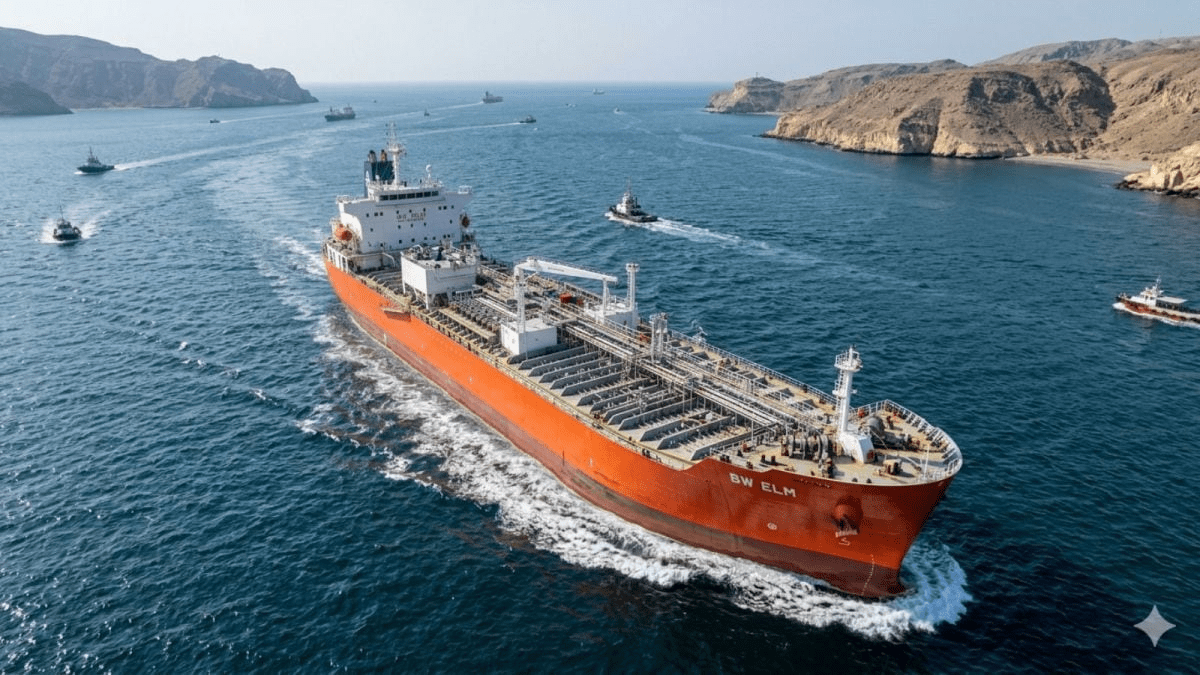
The Ministry of Ports, Shipping, and Waterways confirmed on Tuesday that 18 India-flagged vessels—including tankers carrying crude oil, LPG, and LNG—are currently anchored and stranded to the west of the Strait of Hormuz. This critical maritime chokepoint has been virtually paralyzed since the outbreak of the West Asia war on February 28, 2026.
Add businessleague.in as a Preferred Source


In total, 28 vessels (including 10 foreign-flagged ships bound for India) are caught in the high-risk area (HRA), with the government prioritizing the safe passage of 485 Indian seafarers currently onboard.
Also Read |Tamil Nadu Voter List Purge: 97 Lakh Names Deleted in SIR Phase 1
The Logistical Bottleneck: Ships at a Glance
The stranded fleet represents a massive portion of India’s immediate energy supply. The government is coordinating with Tehran to ensure these “non-hostile” vessels can transit.
| Vessel Type | Indian-Flagged | Foreign-Flagged (India Bound) | Total Cargo Load |
| LPG Tankers | 3 | 3 | ~280,000 Tonnes |
| Crude Oil Tankers | 4 | 4 | ~600,000 Tonnes |
| LNG Carriers | 1 | 3 | ~350,000 m³ |
| Empty/Others | 10 | 0 | N/A |
Financial Fallout: Insurance Premiums Skyrocket
The conflict has made shipping through the Persian Gulf prohibitively expensive. Rajesh Kumar Sinha, Special Secretary, noted that war-risk insurance premiums have seen a 1,650% increase:
-
Pre-War Premium: 0.04% of insured value.
-
Current Premium: 0.7% (and rising).
-
Impact: A single tanker carrying ₹800 crore worth of crude now faces an additional insurance cost of over ₹5.6 crore per transit.
Success Stories: The 8 Ships That Made It
Despite the blockade, eight Indian vessels have successfully navigated the strait in the last 72 hours through diplomatic coordination:
Also Read |Tamil Nadu Voter List Purge: 97 Lakh Names Deleted in SIR Phase 1
-
BW TYR: Carrying ~47,000 tonnes of LPG; expected in Mumbai on March 31 (Today).
-
BW ELM: Carrying ~47,000 tonnes of LPG; expected in New Mangalore on April 1.
-
Jag Laadki: Delivered 80,886 tonnes of crude to Mundra on March 18.
-
Jag Vasant & Pine Gas: Delivered over 92,000 tonnes of LPG between March 26-28.
Investigative Insight: India’s “Strait” Dependency
The paralysis of the Strait of Hormuz is a direct threat to India’s domestic stability. India relies on this 21-mile-wide passage for:
-
90% of its LPG imports (Critical for the Ujjwala scheme and household cooking).
-
50% of its LNG imports (Power and industrial fuel).
-
40% of its Crude Oil (Transportation and petrol).
The government’s recent decision to reintroduce PDS Kerosene for 60 days is a direct tactical response to this “Hormuz Chokehold.” By reviving the kerosene supply chain, the Centre is preparing for a scenario where these 18 tankers remain stranded for weeks, potentially leading to a country-wide LPG shortage. Furthermore, while Tehran has promised passage for “non-hostile” ships, the “Case-by-Case” approval process means that Indian diplomats must essentially negotiate the release of every single tanker individually, making a steady energy stream impossible until a formal ceasefire is reached.
Also Read |Tamil Nadu Voter List Purge: 97 Lakh Names Deleted in SIR Phase 1
End….
Add businessleague.in as a Preferred Source

