
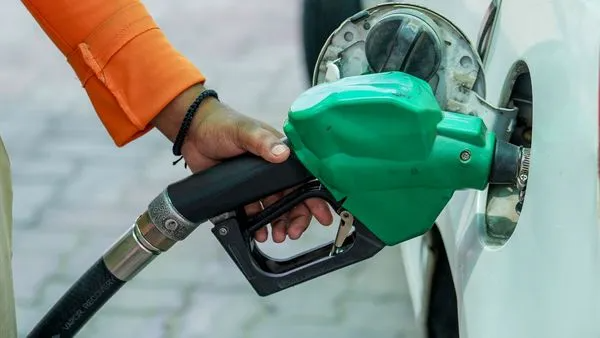
Facing intense pushback over vehicle mileage degradation and engine corrosion risks under the current E20 mandate, the government plans to take a calibrated, slower path forward.
NEW DELHI — The Government of India is heavily considering a delay to its proposed nationwide shift to E25 fuel—a blend comprising 25% ethanol and 75% petrol. The anticipated policy pause comes amidst compounding public backlash regarding the rapid velocity of India’s ethanol blending campaign, which aggressively leaped from a 10% blend (E10) to a 20% standard (E20) in a brief three-year window.
Add businessleague.in as a Preferred Source


Also Read | Automated Insurance Settlement: Inside the Aarogya Setu 2.0 App Features Architecture
While the baseline administrative framework originally mandated a comprehensive E20 rollout by the year 2030, the government advanced the target timeline by five years, cementing the 20% blend as the standardized fuel choice at pumps across the country.
1. What Triggered the Public’s E25 Panic?
Public anxiety regarding an imminent, mandatory E25 enforcement escalated significantly following two recent back-to-back regulatory adjustments by the Union administration:
-
Tax Exemptions: The Ministry of Finance authorized a waiver on central excise duties for high-concentration alternative fuels featuring a 22% to 30% ethanol volume.
-
Standard Notifications: The Bureau of Indian Standards (BIS) officially published standard structural definitions and specifications for these advanced mixtures.
Though interpreted by consumer advocacy groups as the precursors to an unannounced mandatory rollout, top-tier government panels met to evaluate real consumer experience. Officials have explicitly noted that the domestic automotive ecosystem requires substantial breathing room to avoid repeating the friction points seen during the compressed E20 introduction.
Also Read | Automated Insurance Settlement: Inside the Aarogya Setu 2.0 App Features Architecture
2. The Core Scientific & Engineering Obstacles
The technical challenges driving consumer anxiety and auto-industry friction fall into three main engineering categories:
Automotive Structural Vulnerabilities to High Ethanol
├── Lower Calorific Density ──> Perceptible drops in consumer vehicle fuel economy/mileage
├── Thermal Variations     ──> Harsh morning cold-starts during regional winter drops
└── Hygroscopic Nature     ──> Water-moisture attraction leading to rust & fuel system rot
Fuel Economy Deficits
Because ethanol contains less energy per unit volume than traditional petroleum, motorists have documented noticeable mileage degradation. Government entities have verified these lower energy outputs.
Mechanical Failures & Corrosion
Ethanol is highly hygroscopic, meaning it actively absorbs water from surrounding air. In older standard internal combustion engine vehicles, this moisture absorption leads to accelerated fuel line corrosion, degraded rubber seals, and premature engine hardware damage.
Cold Weather Ignition
Ethanol exhibits a higher burning temperature than unblended fossil fuels. Consequently, cars running on higher blends regularly face severe ignition and sputtering issues on cold winter mornings.
3. The Path Forward: Calibrated, Not Cancelled
Despite current timeline concerns, the government remains committed to the macro economic upside of ethanol extraction. The additive possesses a high octane profile that naturally builds structural resistance to premature engine knocking. Furthermore, the lowered localized carbon footprint significantly cuts down the country’s multi-billion-dollar reliance on volatile foreign oil imports.
“There is a view within the government that the transition beyond E20 will need to be spaced out. That is the sense we have got from vehicle manufacturers too. The idea is to go to E25 in a calibrated, graded manner for existing vehicles.”
— Senior Government Official
Moving forward, leading manufacturers are shifting research pipelines toward high-compression ratio engines designed to extract optimal energy metrics from dense biofuel mixtures. However, full mass market commercialization and vehicle homologation processes mean any shift beyond the existing E20 framework will take years of testing before reaching public pumps.
Also Read | Automated Insurance Settlement: Inside the Aarogya Setu 2.0 App Features Architecture
Add businessleague.in as a Preferred Source
🙏 Support Independent Journalism
We keep news free for you.
Most readers support with ₹500 ❤️
or scan QR below

Voluntary contribution. No tax benefits.
DISCLAIMER
We have taken all measures to ensure that the information provided in this article and on our social media platform is credible, verified and sourced from other Big media Houses. For any feedback or complaint, reach out to us at businessleaguein@gmail.com