


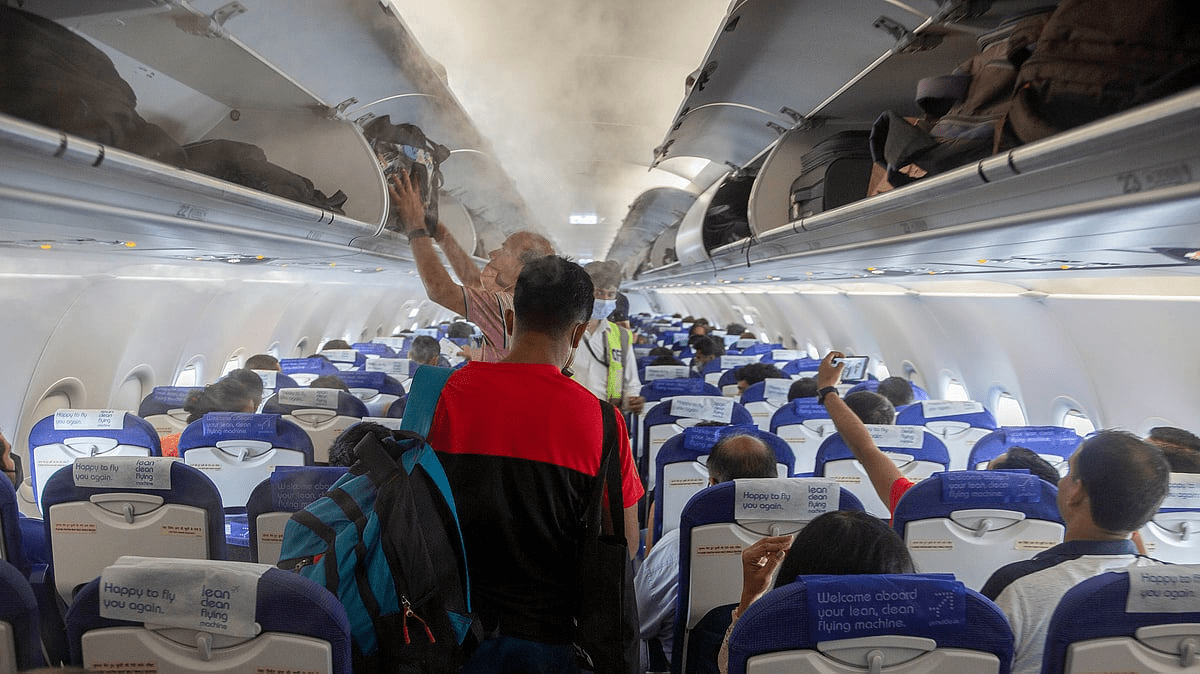
In a significant reversal for air travelers, the Ministry of Civil Aviation has put “in abeyance” its ambitious directive that would have forced airlines to offer at least 60% of seats without any additional selection charges. The rule, originally slated to take effect on April 20, 2026, was suspended on Thursday following intense lobbying from the Federation of Indian Airlines (FIA) and Akasa Air.
Add businessleague.in as a Preferred Source


For now, the status quo remains: airlines are only required to keep 20% of seats free for selection, while the remaining 80% can carry a “seat-matching” fee ranging from ₹200 to ₹2,100.
Also Read |Tamil Nadu Voter List Purge: 97 Lakh Names Deleted in SIR Phase 1
The Policy Tug-of-War: Passengers vs. Profits
The government’s decision to freeze the 60% mandate comes after a “comprehensive review” of the commercial impact on an industry already reeling from the West Asia war and soaring ATF (Aviation Turbine Fuel) prices.
-
The Airline Argument: Carriers argued that the 60% free-seat rule was inconsistent with India’s deregulated tariff regime. They warned it would lead to a “fare structure collapse,” potentially forcing base ticket prices higher to compensate for lost ancillary revenue.
-
The Passenger Grievance: The original March 18 directive was a response to a surge in consumer complaints. Many passengers felt “forced” into paying extra just to sit together, as “free” seats were often restricted to the middle or back of the aircraft.
-
The “Abeyance” Status: By putting the rule on hold, the Ministry is signaling a period of further consultation, effectively delaying any relief for travelers during the peak summer holiday season.
Also Read |Tamil Nadu Voter List Purge: 97 Lakh Names Deleted in SIR Phase 1
Current Seat Selection Costs (Industry Average)
| Seat Category | Potential Charge |
| Middle/Back Rows | ₹0 (Limited to 20% of total capacity) |
| Standard Window/Aisle | ₹200 – ₹600 |
| Front Rows | ₹800 – ₹1,500 |
| Extra Legroom / Emergency Exit | ₹1,200 – ₹2,100 |
Investigative Insight: The “War-Time” Waiver
The government’s retreat is likely more about macroeconomics than just “deregulated tariffs.” With Operation Epic Fury in its fifth week and the Strait of Hormuz still a high-risk zone, the cost of operating a flight in India has skyrocketed. Forcing airlines to give up 40% of their ancillary revenue (the difference between the current 20% free seats and the proposed 60%) at a time when they are already facing ₹100+ fuel spikes could have led to a wave of “technical bankruptcies.”
By suspending the rule, the Ministry is throwing a “liquidity lifeline” to carriers like IndiGo, Air India, and Akasa. However, this “Fair Access” delay means that the middle-class traveler—already struggling with ₹6,000 LPG cylinders and a ₹10 lakh crore market wipeout—will continue to bear the brunt of hidden flying costs. As the Artemis II crew battles software glitches in space and Russian oil seeks new routes to India, the domestic aviation sector has successfully lobbied for its right to remain expensive, at least until the “next order” is issued.
Also Read |Tamil Nadu Voter List Purge: 97 Lakh Names Deleted in SIR Phase 1
End….
Add businessleague.in as a Preferred Source

