

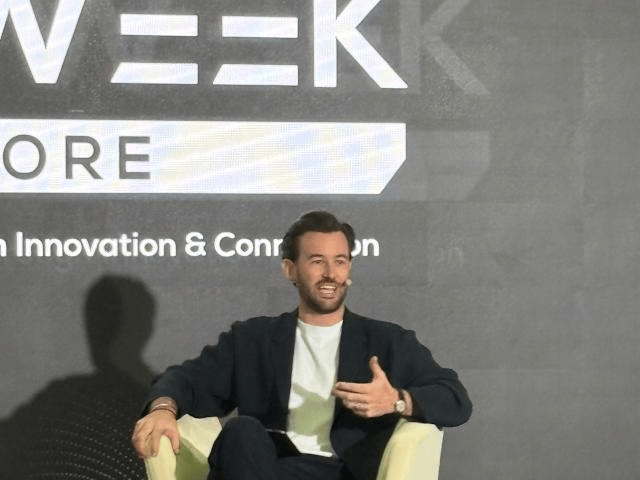
Now a tech legend admits he stopped coding entirely. Andrej Karpathy hasn’t typed a single line since December. Therefore, the OpenAI co-founder feels “extremely nervous” about the future. He describes his new reality as a “state of psychosis.” Meanwhile, autonomous agents now handle 100% of his technical work. This shift marks a permanent change in how humans build software.
Add businessleague.in as a Preferred Source


Also Read |Tamil Nadu Voter List Purge: 97 Lakh Names Deleted in SIR Phase 1
At a Glance:
-
The Admission: Karpathy hasn’t written code personally since December 2025.
-
The Shift: His workflow flipped from 80% human-led to 100% AI-delegated.
-
The “Psychosis”: An intense, obsessive focus on what AI agents can achieve.
-
Dobby the Elf: His custom AI agent that manages his entire smart home.
-
The Tool: OpenClaw is the framework driving this massive productivity surge.
In This Article:
-
The End of Manual Coding
-
Understanding AI Psychosis
-
Meet Dobby: The Digital House Elf
-
The Rise of OpenClaw Framework
-
Why Karpathy is Extremely Nervous
-
The “Karpathy Loop” Explained
-
Future of Software Engineering
-
Frequently Asked Questions
Also Read |Tamil Nadu Voter List Purge: 97 Lakh Names Deleted in SIR Phase 1
The End of Manual Coding
Now the very definition of “coding” is changing. Andrej Karpathy shared this shocking update on the No Priors podcast. He revealed that his coding habits flipped suddenly last December. Therefore, he no longer spends hours typing out syntax. Instead, he spends 16 hours a day “expressing intent” to agents.
So how dramatic is this change? Previously, Karpathy wrote 80% of his code manually. Now, AI agents handle nearly 100% of the heavy lifting. Thus, the human role has shifted from creator to manager.
“I don’t think a normal person realizes how dramatic it was,” Karpathy noted. Meanwhile, he insists the shift is now permanent.
Understanding AI Psychosis
Now Karpathy uses a startling term for his current state. He calls it “AI psychosis.” But this isn’t a medical diagnosis. Instead, it describes an obsessive drive to push AI limits. Therefore, he stays awake for hours testing what these agents can do.
So what fuels this feeling? The speed of agentic development is unprecedented. Every day, new “macro actions” become possible. Thus, Karpathy feels a constant urge to stay at the frontie
“I’m antsy that I’m not at the forefront of it,” he admitted. Still, he continues to run hundreds of experiments daily.
Meet Dobby: The Digital House Elf
Now Karpathy’s experiments aren’t limited to software. In January, he built a personal system nicknamed “Dobby.” This agent acts as a digital house elf for his home. Therefore, Dobby handles everything from lighting to security.
First, the system connects via WhatsApp. You simply message Dobby in natural language. Next, the agent executes complex tasks across home apps. Thus, Karpathy never has to manually adjust his thermostat again.
“Dobby is in charge of the house,” he said. Meanwhile, the agent even monitors delivery alerts and sound systems.
Also Read |Tamil Nadu Voter List Purge: 97 Lakh Names Deleted in SIR Phase 1
The Rise of OpenClaw Framework
Now the engine behind this change is OpenClaw. This agentic framework has taken over the tech industry. Therefore, developers are moving away from traditional IDEs
So what makes OpenClaw special? It allows agents to execute multi-step tasks autonomously. For example, it can write code, debug it, and deploy it alone. Thus, the bottleneck is no longer compute power.
Instead, the bottleneck is human skill. “It often feels like a skill issue when things fail,” Karpathy explained. Therefore, learning to direct agents is the new essential skill.
Why Karpathy is Extremely Nervous
Now you might wonder why a pioneer feels anxious. Karpathy has co-founded OpenAI and led Tesla’s AI efforts. Therefore, he should feel confident. Yet, the pace of change makes him “extremely nervous.”
First, he sees massive innovation on social media daily. Next, he worries about falling behind the latest “good ideas.” Thus, even experts struggle to keep up with the frontier.
“I need to be at the forefront,” Karpathy emphasized. Meanwhile, he watches agents create their own “digital societies” on platforms like Moltbook.
The “Karpathy Loop” Explained
Now the tech community has a new term: the “Karpathy Loop.” This refers to a specific autonomous experiment method. Therefore, it is becoming a standard for AI researchers.
The Three Steps:
First, define an editable asset for the agent. Next, set a single scalar metric for success. Finally, run a time-boxed cycle of experiments. Thus, the agent can optimize code without human input.
Recently, Karpathy ran 700 experiments overnight this way. The agent found 20 improvements that humans missed. So the productivity gains are simply undeniable.
Also Read |Tamil Nadu Voter List Purge: 97 Lakh Names Deleted in SIR Phase 1
Future of Software Engineering
Now we face a new era of engineering. The word “coding” might become outdated soon. Therefore, future engineers will act as “agent orchestrators.”
So what does this mean for students? Learning syntax is less important than problem-solving. Thus, education must shift toward high-level logic and intent. Meanwhile, agents will handle the repetitive syntax work.
“The era of passive software is over,” industry experts say. Therefore, we must adapt to a world of autonomous digital workers.
Frequently Asked Questions
When did Andrej Karpathy stop coding?
He noticed a total shift in his workflow in December 2025.
What is OpenClaw?
It is an open-source agentic framework that lets AI execute tasks.
Who is Dobby the House Elf?
Dobby is Karpathy’s personal AI agent that manages his smart home via WhatsApp.
What does “AI psychosis” mean?
It is Karpathy’s term for the obsessive state of exploring AI’s limits.
Is manual coding dead?
For Karpathy, manual coding is now replaced by “expressing intent” to agents.
Also Read |Tamil Nadu Voter List Purge: 97 Lakh Names Deleted in SIR Phase 1
End…..
Add businessleague.in as a Preferred Source

