


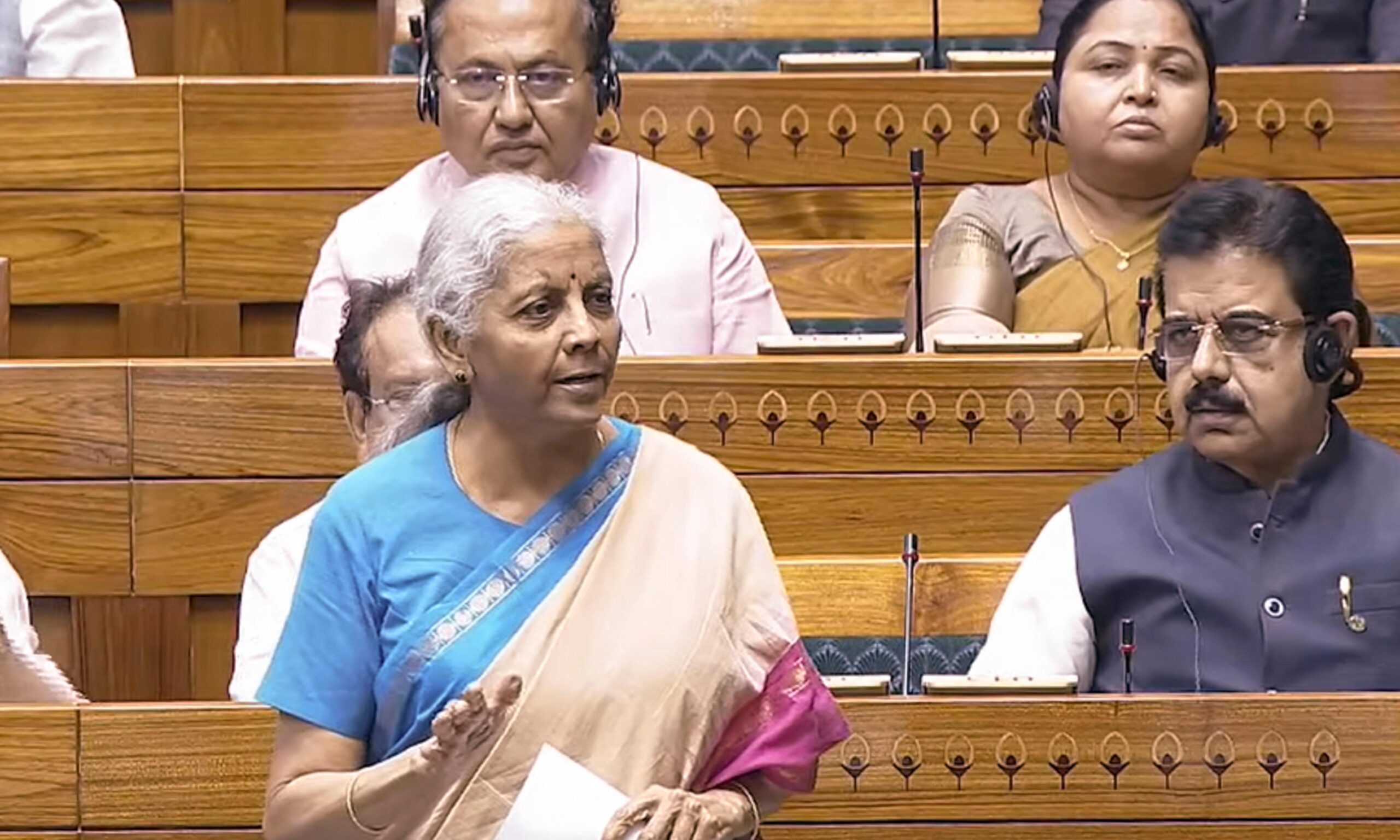
India is building a “fiscal fortress” to withstand the worsening global energy and logistics crisis. On Saturday, March 14, 2026, the details of Finance Minister Nirmala Sitharaman’s address to Parliament revealed a proactive shift in India’s economic strategy. By proposing a ₹1 lakh crore Economic Stabilisation Fund, the government is moving away from reactive budgeting toward a permanent mechanism for crisis management.
Add businessleague.in as a Preferred Source


As the US-Iran conflict continues to choke the Strait of Hormuz, driving oil and fertiliser prices to record highs, this fund is intended to provide “fiscal headroom” for the government to intervene without waiting for a new budget cycle.
Also Read |Tamil Nadu Voter List Purge: 97 Lakh Names Deleted in SIR Phase 1
The Stabilisation Fund: A Buffer for Global Headwinds
The core objective of the ₹1 lakh crore fund is agility.
-
Rapid Response: It allows for immediate inter-account transfers to sectors hit by external disruptions (e.g., aviation during fuel spikes or tech during chip shortages).
-
Unanticipated Shocks: “In anticipation of what cannot be anticipated,” the FM noted, highlighting that the 2026 geopolitical landscape requires “on-call” capital.
Fiscal Deficit & Spending: Maintaining the 4.4% Balance
The most significant mathematical feat claimed by the FM is the preservation of the fiscal deficit.
-
Deficit Retained: The target remains at 4.4% of GDP for FY 2025-26.
-
The Math: While the gross additional expenditure is ₹2.81 lakh crore, the government has managed this through ₹80,000 crore in additional receipts and a reduction in total expenditure from ₹50.65 lakh crore to ₹49.65 lakh crore.
The Agricultural Shield: Fertiliser & Food Subsidies
Recognizing that the West Asia war is a direct threat to the Indian farmer, the FM announced substantial additional funding.
-
Fertiliser Subsidy: An extra ₹19,230 crore to absorb the rising cost of urea and ammonia.
-
PMGKAY: ₹23,641 crore to ensure the free foodgrain scheme continues without a hitch, protecting the most vulnerable from the recent 3.21% inflation spike.
Also Read |Tamil Nadu Voter List Purge: 97 Lakh Names Deleted in SIR Phase 1
Global Context: The Hormuz Squeeze on Urea
India’s agricultural security is currently hostage to the Persian Gulf.
-
The Corridor: The Strait of Hormuz is a critical passage for crop nutrients.
-
The Squeeze: With the strait effectively closed, the import cost of nutrients has skyrocketed. The FM assured that “farmers would not face any shortage,” implying that the government will bear the total cost of the price hike.
Reality Check
The creation of a ₹1 lakh crore fund is a bold signaling move to global investors that India is “crisis-ready.” Still, the 4.4% fiscal deficit target depends heavily on “additional receipts” of ₹80,000 crore. Therefore, if the global recession worsens and tax collections dip, maintaining this target while spending ₹1 trillion on a new fund will be an uphill battle. In fact, this fund is essentially a “Contingency Fund” on steroids, designed for an era where “black swan” events have become the norm.
The Loopholes
The FM says there will be “no increase in overall expenditure.” In fact, this is a “Reallocation Loophole”—the government is cutting ₹1 lakh crore from other planned projects (as seen in the reduction of total expenditure from BE to RE) to fund this new Stabilisation Fund. Therefore, while the deficit doesn’t rise, the investment in non-emergency infrastructure might slow down. Still, the “Subsidy Loophole” remains; by increasing fertiliser subsidies now, the government avoids the political fallout of a “rural crisis” ahead of upcoming state elections.
Also Read |Tamil Nadu Voter List Purge: 97 Lakh Names Deleted in SIR Phase 1
What This Means for You
If you are a taxpayer or a business owner, breathe a sigh of relief regarding fiscal stability. First, realize that the government is not planning to print money or borrow aggressively to manage the West Asia shock. Then, if you are a farmer or depend on the rural economy, understand that the price of urea will not rise for you, as the government has pre-emptively absorbed the ₹19,230 crore shock.
Finally, understand that inflation is the variable to watch. You should monitor the next CPI reading; while the FM is protecting subsidies, the “indirect” cost of $100 oil will still seep into your transport and grocery bills. Before you make major investment changes, wait for the Parliamentary approval of these supplementary demands next week.
What’s Next
Expect Parliament to pass the second batch of supplementary demands by Wednesday. Then, look for the operational guidelines of the Economic Stabilisation Fund to be released by the Finance Ministry. Finally, expect quarterly reports from the CGA (Controller General of Accounts) to show exactly where the first “draw-down” from this fund occurs.
Also Read |Tamil Nadu Voter List Purge: 97 Lakh Names Deleted in SIR Phase 1
End….
Add businessleague.in as a Preferred Source

